On April 28, 2024, the weather station at Ninoy Aquino International Airport in Pasay City recorded 38.8°C — the highest temperature ever measured in Metro Manila in recorded history, breaking a 109-year-old record. By nightfall of the same day, overnight temperatures never dropped below 30.1°C — the highest minimum temperature ever recorded anywhere in the Philippines. In Iba, Zambales, the heat index that weekend reached 53°C.
Across the road from that NAIA weather station, pharmaceutical products, vaccines, biologics, and temperature-sensitive food items were sitting in warehouses, cold rooms, and distribution centres — all of which were designed to maintain specific temperature ranges. Some were succeeding. Some were silently failing. The difference, in most cases, came down to three things: how well the facility was designed for Philippine tropical conditions, how adequately the HVAC system was sized for peak summer ambient, and whether the operators knew where their temperature vulnerabilities actually were.
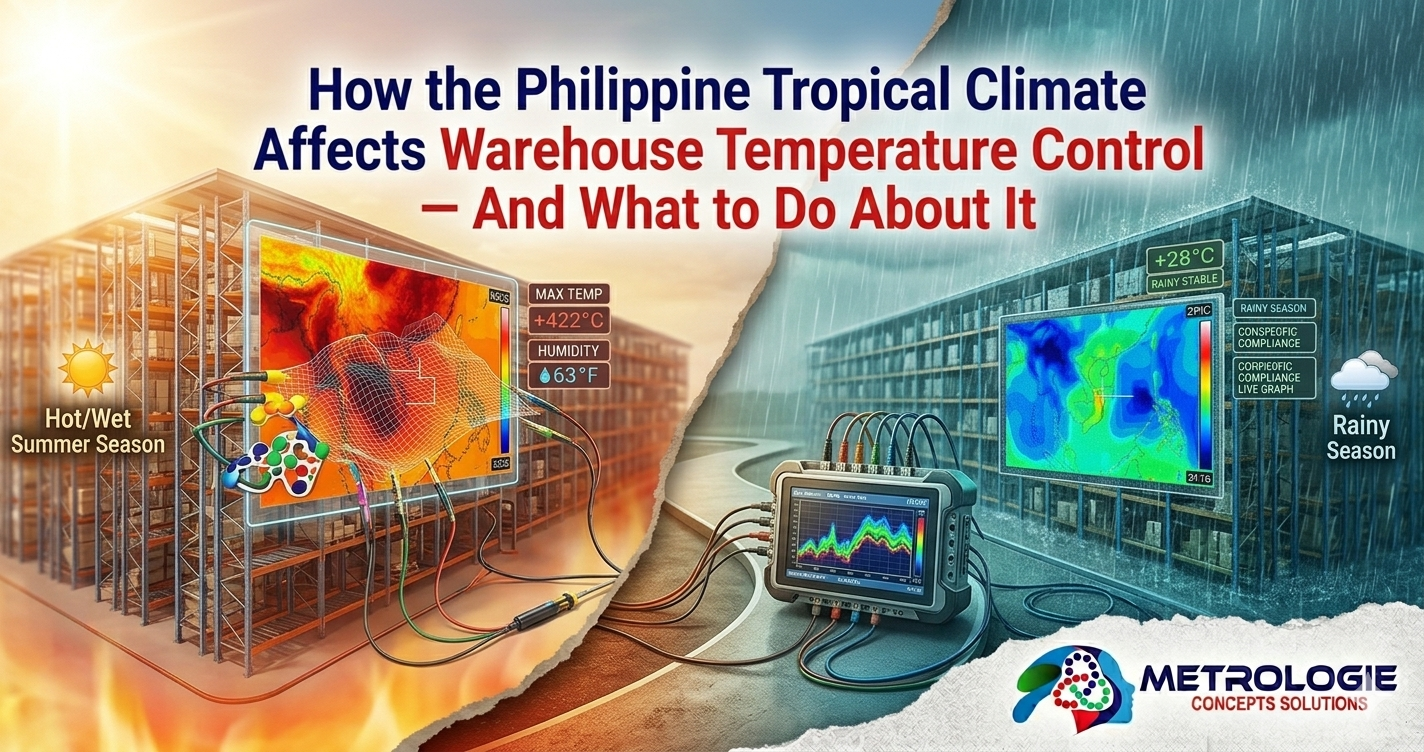
This article is the most comprehensive guide available on how the Philippine tropical climate — with its extreme heat, high humidity, typhoon seasons, power supply challenges, and urban heat island effects — affects the ability of warehouses, cold rooms, and pharmaceutical storage facilities to maintain required temperatures. It explains the specific physical mechanisms by which Philippine climate creates temperature compliance problems, provides PAGASA-based data to quantify those problems, and gives warehouse managers and QA officers 12 practical, evidence-based solutions they can implement to protect their products, their compliance, and their business.
| Why This Article Is Unlike Anything Else You Will FindThis article is written specifically for the Philippine operating environment — not adapted from temperate-climate HVAC guidance. Every data point, every scenario, every solution is grounded in Philippine reality: PAGASA temperature records, the Metro Manila urban heat island, the typhoon power interruption cycle, and the specific architectural characteristics of Philippine warehouse construction.No global content provider can write this article with this specificity. This is the guide that Philippine warehouse operators, QA managers, and facility engineers actually need. |
1. The Philippine Climate: What the Data Actually Says
Before addressing solutions, it is essential to understand the precise dimensions of the thermal challenge that Philippine warehouses face. This is not a generic tropical climate problem — the Philippine climate has specific characteristics that create specific warehouse temperature control challenges that differ in important ways from other tropical markets in Southeast Asia.
Temperature: The Scale of the Challenge
The Philippines sits between 5°N and 21°N latitude — entirely within the tropics. PAGASA climate data establishes the following temperature profile for key storage locations:
| Location | Avg. Temp (Cool Season Nov-Feb) | Avg. Temp (Hot Season Mar-May) | Peak Recorded Temp | Implication for CRT Storage (20-25°C target) |
| Metro Manila | 24°C to 27°C | 34°C to 38.8°C | 38.8°C (April 2024 — all-time record) | HVAC must overcome 14°C to 19°C differential at peak; massive cooling load |
| Lowland Luzon | 23°C to 26°C | 32°C to 39.2°C | 40°C+ (Isabela, April 2024) | Even higher peaks than Manila in some CALABARZON/Central Luzon locations |
| Lowland Visayas | 25°C to 28°C | 31°C to 36.9°C | 42°C heat index common in May | Cebu, Iloilo facilities face sustained heat without the cool season relief of Tagaytay area |
| Lowland Mindanao | 25°C to 28°C | 33°C to 36.4°C | 36°C+ with high humidity compound | Davao, GenSan facilities face high humidity compounding heat effect year-round |
| CALABARZON (CAVITE, LAGUNA, BATANGAS) | 24°C to 27°C | 34°C to 38°C | 38°C+ in peak summer | Primary pharmaceutical distribution zone — highest compliance risk in peak summer |
These are air temperatures. The effective thermal load on a warehouse building — particularly one with a metal roof — is significantly higher. Roof surface temperatures on corrugated metal warehouse roofs in the Philippines regularly reach 70°C to 85°C during peak afternoon hours in summer. The radiant heat from these surfaces drives interior ceiling temperatures 8°C to 15°C above the ambient air temperature, creating internal conditions that HVAC systems must overcome before any product can be maintained at a controlled temperature.
The Urban Heat Island Effect: Metro Manila’s Hidden Temperature Problem
Warehouses in Metro Manila and adjacent CALABARZON municipalities face an additional thermal challenge that does not appear in PAGASA’s regional temperature data: the urban heat island (UHI) effect. Research on Metro Manila’s urban microclimate, confirmed by the OECD’s 2026 Economic Survey of the Philippines, shows that the urban heat island effect raises temperatures in dense urban areas above regional ambient measurements.
For warehouse operators in the industrial corridors of Valenzuela, Navotas, Caloocan, and Parañaque — all of which are heavily built-up, high-traffic, low-vegetation urban environments — the effective ambient temperature around the warehouse may be 2°C to 4°C higher than the PAGASA station reading for Metro Manila. This means that a warehouse in Valenzuela may be operating against an effective ambient of 41°C to 42°C during a day when PAGASA reports Metro Manila at 38°C.
This urban heat island loading is invisible to operators who rely on PAGASA data alone for climate planning. Only a thermal mapping study conducted under actual local conditions captures this additional thermal load — and shows its impact on the warehouse’s internal temperature distribution.
Humidity: The Second Dimension of the Philippine Climate Challenge
Temperature alone does not define the Philippine climate challenge for warehouse operators. Relative humidity — which averages 60% to 70% during the dry season and 85% to 95% during the wet season — creates a second dimension of thermal stress that affects both the physical performance of temperature control equipment and the stability of stored products.
High humidity affects warehouse temperature control in three specific ways:
- Increased thermal conductivity of building materials: Moisture infiltration into insulation panels reduces their thermal resistance, increasing heat ingress through walls and roofs. A warehouse panel that provides R-10 insulation at 60% humidity may provide only R-7 or R-8 at 90% humidity — a 20% to 30% increase in heat ingress that translates directly to higher HVAC load and elevated hot spot temperatures.
- Increased latent heat load on HVAC systems: Humid air contains significantly more thermal energy than dry air at the same temperature. When humid tropical air enters a warehouse through door openings, penetrations, or insulation gaps, the HVAC system must remove both the sensible heat (temperature reduction) and the latent heat (dehumidification) of that infiltrating air. This combined sensible and latent load is significantly greater than the sensible-only load that dominates in temperate-climate warehouse HVAC design.
- Condensation on cooling surfaces: In cold rooms and refrigerators, high ambient humidity accelerates ice formation on evaporator coils, increasing defrost cycle frequency and creating temperature spikes during each defrost event. A refrigerated cold room with a defrost cycle every 6 hours in low humidity conditions may cycle every 3 to 4 hours during wet season — doubling the frequency of temperature disruption events.
2. The Seven Physical Mechanisms That Cause Temperature Compliance Failures in Philippine Warehouses
Temperature compliance failures in Philippine warehouses are not random events. They follow predictable physical patterns determined by the specific characteristics of the Philippine climate interacting with warehouse construction and HVAC design. Understanding these mechanisms enables warehouse operators to identify their own vulnerabilities and implement targeted solutions.
Mechanism 1: Solar Gain Through the Building Envelope
Solar radiation is the primary driver of temperature compliance failures in Philippine warehouses. The Philippines receives some of the highest solar irradiance in Southeast Asia — approximately 4.5 to 5.5 kWh per square metre per day during the hot dry season. When this radiation strikes a warehouse roof or wall, it is absorbed and conducted into the building interior as heat.
The magnitude of this effect depends critically on the roof construction. A metal roof without insulation or radiant barrier will transfer heat to the building interior at a rate that can drive ceiling-level air temperatures 10°C to 15°C above ambient during peak afternoon hours. A well-insulated roof (polyurethane foam between metal panels, or a ventilated roof system with radiant barrier) may limit this temperature elevation to 2°C to 4°C above ambient.
For a warehouse trying to maintain 20°C to 25°C (CRT range) with an ambient of 37°C and an uninsulated metal roof creating ceiling temperatures of 50°C to 55°C, the HVAC system must overcome an internal radiant heat load that may be 20°C to 30°C above the target — a load that many warehouse HVAC systems in the Philippines are simply not sized to handle.
Solar gain through west-facing and south-facing walls — particularly those without insulation or shading — adds a wall-adjacent hot spot that may be 5°C to 10°C above the warehouse body temperature during afternoon hours. Products stored against these walls in racks or on pallets are exposed to these elevated temperatures even when the general warehouse body appears compliant.
Mechanism 2: Loading Dock Hot Air Infiltration
Every opening of a loading dock door in a Philippine summer is a thermal event. When a warehouse dock door opens with ambient air at 37°C to 38°C outside and 24°C inside, a wave of hot air — with a density lower than the cool interior air — rolls into the warehouse at ceiling level while cool interior air exits at floor level. This air exchange is rapid and significant: a dock door of 3.5m × 4m left open for 5 minutes during peak afternoon heat can introduce enough thermal energy to raise the dock-adjacent zone temperature by 5°C to 8°C.
In a pharmaceutical distribution warehouse with 10 to 15 truck deliveries per day, the cumulative effect of these door openings can make the dock zone thermally non-compliant for much of the working day — while the permanent monitoring sensor 50 metres away in the warehouse body reads a compliant 23°C. This disconnect between monitored temperature and dock zone temperature is one of the most common drivers of undetected product quality failures in Philippine pharmaceutical warehouses.
Mechanism 3: Thermal Stratification and Height Gradient
Heat rises. In an enclosed warehouse space, warm air — which is less dense than cool air — accumulates at ceiling level while cooler, denser air settles toward the floor. This phenomenon, called thermal stratification, creates a vertical temperature gradient in the warehouse that can be 3°C to 8°C between floor level and ceiling level under Philippine ambient conditions.
For rack storage warehouses where products are stored at multiple height levels, thermal stratification means that products on the highest rack level may be significantly warmer than products at floor level — even when a single monitoring sensor at mid-height reads a compliant temperature. A pharmaceutical warehouse with rack storage to 8 metres height and ceiling-level temperatures of 32°C — due to the combined effect of a warm roof and thermal stratification — may be maintaining compliance in the middle of the rack structure while the top pallet positions are chronically out of specification.
The severity of thermal stratification in a Philippine warehouse depends on: the ceiling height (taller warehouses show more stratification), the HVAC design (well-designed systems that introduce cool air at high velocity and recirculate ceiling air back to floor level minimise stratification), and the time of day (stratification is most pronounced during peak heat hours in mid-afternoon).
Mechanism 4: HVAC Capacity Shortfall Under Peak Summer Load
An HVAC system that maintains 24°C in a warehouse during December — when Metro Manila ambient is 25°C and the HVAC operates at perhaps 30% to 40% of its rated capacity — may be completely inadequate during April, when Metro Manila ambient is 38°C and the HVAC must work at 100% capacity against a thermal load that may exceed its design specification.
This HVAC capacity shortfall is endemic in Philippine warehouses for a straightforward reason: many Philippine warehouse HVAC systems are designed, specified, or selected based on average ambient conditions, general industry rules of thumb, or the capacity of the previous tenant’s system — rather than on a rigorous heat load calculation for peak Philippine summer conditions. A system sized for 30°C ambient will be adequate for 9 months of the year and critically undersized for the 3 months when compliance matters most.
The HVAC capacity shortfall manifests as a warehouse that appears fully compliant from November to February, shows borderline compliance in March, and experiences regular temperature excursions from April to June — with the monitoring system recording alarms at a frequency that staff begin to treat as normal rather than as evidence of a fundamental capacity problem.
Mechanism 5: Power Interruption and Temperature Recovery Asymmetry
Philippine power supply reliability varies significantly by location and utility provider. Areas served by distribution utilities outside the major grid operators — including many provincial and rural areas with significant warehouse activity in support of regional food and pharmaceutical distribution — experience more frequent interruptions, longer outage durations, and more voltage instability than Manila-served areas.
The critical asymmetry of Philippine power interruptions for temperature-controlled storage is this: a warehouse that takes 2 hours to cool from ambient to its setpoint temperature at the start of each working day can lose that 2 hours of cooling in 20 to 30 minutes during a power outage on a 38°C afternoon. The rate of heating during a power failure is significantly faster than the rate of cooling when power is restored — because the warehouse HVAC must overcome the ambient heat load while the heat is actively infiltrating through the building envelope.
This asymmetry means that every power interruption in the Philippines is a potential temperature excursion event — and the severity of the excursion is directly proportional to the ambient temperature at the time of the interruption. A 30-minute brownout in December is manageable. A 30-minute brownout in April at peak afternoon is potentially a product-damaging event.
Mechanism 6: Humidity-Driven Insulation Degradation Over Time
Philippine humidity accelerates a slow, cumulative degradation process in warehouse insulation that is invisible in day-to-day monitoring but becomes significant over multi-year time periods. Moisture infiltration into polyurethane foam insulation — the most common insulation material in Philippine cold rooms and insulated warehouse panels — gradually reduces its effective thermal resistance as moisture fills the foam cells that were originally filled with low-conductivity gas.
A cold room insulated to R-25 at commissioning may degrade to effective R-18 or R-20 over five to eight years of Philippine humidity exposure, particularly in facilities that are not maintained with rigorous attention to panel joint sealing and door seal integrity. This gradual degradation manifests as a slow drift in the cold room’s thermal performance — slightly higher hot spot temperatures, slightly longer recovery times, slightly more frequent temperature alarms — that is easily attributed to equipment ageing rather than identified as an insulation problem.
Thermal mapping at periodic requalification intervals reveals this drift by comparing hot spot temperatures, temperature gradients, and recovery times against the baseline established in the original qualification study. A systematic worsening of these metrics is the fingerprint of insulation degradation.
Mechanism 7: The Combined Effect of Multiple Simultaneous Stressors
Perhaps the most important insight about Philippine warehouse temperature control is that the mechanisms described above do not operate independently. They combine and interact in ways that make the total thermal challenge far greater than the sum of its parts.
Consider a pharmaceutical distribution warehouse in CALABARZON during April: ambient air temperature of 37°C (Mechanism 1 — solar gain through metal roof driving ceiling to 50°C+); three truck deliveries in the afternoon (Mechanism 2 — dock hot air infiltration at each opening); thermal stratification driving the top pallet tier to 5°C above mid-warehouse temperature (Mechanism 3); HVAC system operating at 100% capacity with inadequate headroom for the combined solar and infiltration load (Mechanism 4); two 20-minute brownouts during peak afternoon hours (Mechanism 5); and insulation panels that have degraded over four years of wet season humidity exposure (Mechanism 6). The combined effect of all six mechanisms simultaneously is a compliance failure that was not predictable from any single mechanism alone — and that only a comprehensive thermal mapping study under peak summer ambient conditions will reveal.
3. How Philippine Climate Affects Different Warehouse Types Differently
The severity of tropical climate impacts on temperature control varies significantly by warehouse type. Understanding which mechanisms are most relevant to your specific facility type helps prioritise the solutions most likely to make a material difference.
CRT Pharmaceutical Warehouses (15°C to 30°C)
Controlled room temperature pharmaceutical warehouses are the most climate-stressed warehouse type in the Philippines. The CRT range (15°C to 30°C) — with a preferred operating zone of 20°C to 25°C — must be maintained in an environment where peak ambient temperatures routinely reach 37°C to 39°C. The differential between ambient and target (12°C to 19°C) is the largest of any pharmaceutical storage category.
The most common failure modes for CRT warehouses in the Philippines are: HVAC capacity shortfall during peak summer hours (April to May), solar-driven hot spots near the roof and walls, and loading dock temperature spikes during afternoon delivery windows. WHO Supplement 8 seasonal mapping requirement directly addresses this — a summer study in April or May is the most revealing compliance test a CRT pharmaceutical warehouse can undergo.
Cold Rooms (+2°C to +8°C)
Pharmaceutical cold rooms in the Philippines are less directly affected by ambient temperature than CRT warehouses — because the refrigeration system actively removes heat rather than relying on HVAC to maintain a modest temperature differential. However, Philippine climate affects cold room performance in important and often underestimated ways.
The refrigeration system’s efficiency drops significantly in summer. Condenser units mounted on external walls or rooftops operate at higher condensing temperatures when ambient is 38°C than when it is 25°C, reducing the system’s coefficient of performance and increasing compressor run time. A system that is adequately sized for 25°C ambient may be undersized for 38°C — leading to compressor overrun, reduced cooling capacity at the evaporator, and elevated hot spot temperatures inside the cold room.
The door-opening thermal event is also more severe in summer. Each opening of a +2°C to +8°C cold room door admits a pulse of 38°C air — a 30°C to 36°C temperature differential that demands significant cooling to dissipate. Recovery time after door openings is longer during summer, meaning that the door-adjacent zone spends more time at elevated temperatures during peak summer operations than during cool season operations.
Food Cold Storage and HACCP Warehouses
Food cold storage in the Philippines — serving the country’s USD 874.6 million cold storage market projected to reach USD 1.65 billion by 2033 — faces the same tropical climate challenges as pharmaceutical cold storage, with the additional variables of higher product throughput, greater door-opening frequency, and seasonal peaks driven by the food supply chain calendar.
The combination of tropical summer ambient conditions and high throughput operations makes food cold chain facilities among the highest-risk temperature control environments in the Philippine logistics sector. HACCP compliance requires documented temperature control at critical control points — which, in the Philippine climate, means summer-condition thermal mapping of cold storage critical control points is a compliance necessity, not an optional quality enhancement.
Ambient Temperature Food Warehouses
Ambient temperature food storage warehouses — holding products like dry goods, canned food, confectionery, and temperature-sensitive fresh produce in controlled conditions — face the full force of the Philippine climate with no refrigeration system to moderate the impact. The question for these facilities is not whether they can maintain a 2°C to 8°C range — it is whether they can maintain controlled ambient conditions (typically 15°C to 30°C) in a 37°C to 39°C Philippine summer.
For many Philippine food warehouses, the honest answer — if it were tested by a summer thermal mapping study — is no. Sections of the warehouse near uninsulated metal roofs, near west-facing walls, or near loading docks that are opened repeatedly during afternoon delivery peaks regularly exceed 30°C during summer, creating temperature conditions that accelerate product deterioration, reduce shelf life, and potentially support microbial growth in temperature-sensitive food categories.
4. The Geography of Philippine Climate Risk: Where Your Warehouse Is Matters
The Philippine climate is not uniform across the archipelago. The same warehouse design and HVAC system will face significantly different thermal challenges in Metro Manila versus Davao, or in CALABARZON versus Eastern Visayas. Understanding the geographic dimension of Philippine climate risk is essential for facility design, HVAC sizing, and thermal mapping study timing.
| Region / Area | Peak Summer Temp. (PAGASA) | Key Climate Risk | Worst Months for Storage | Special Consideration |
| Metro Manila (NCR) | 35°C to 38.8°C | Urban heat island adds 2-4°C above regional ambient; high humidity year-round | April to June | Highest pharmaceutical warehouse concentration; urban heat island effect critical for design |
| CALABARZON (Cavite, Laguna, Batangas) | 34°C to 38°C | Industrial corridor; high warehouse density; less urban heat island but high solar load | April to May | Primary pharmaceutical distribution hub; summer mapping most critical for CRT warehouses |
| Central Luzon (Clark, Pampanga) | 35°C to 39°C | Extreme summer heat; Clark area receives higher temperatures than Manila in some years | April to May | Growing pharmaceutical and cold chain hub; design for 40°C ambient to be safe |
| Northern Luzon (Isabela, Cagayan) | 37°C to 40°C | Highest peak temperatures in the Philippines; extreme summer heat | April to May | Hottest region in Philippines; extreme solar gain; HVAC sizing critical |
| Lowland Visayas (Cebu, Iloilo) | 31°C to 36°C | High humidity year-round; significant wet season typhoon risk | April to May; typhoon season Aug-Oct | Cebu pharmaceutical hub; power interruption risk during typhoons |
| Eastern Visayas (Leyte, Samar) | 28°C to 33°C | High rainfall; high humidity throughout year; typhoon landfall zone | Wet season year-round | Humidity is the dominant climate challenge; typhoon power disruption the key risk |
| Mindanao (Davao, GenSan) | 32°C to 36°C | High humidity; year-round warm temperatures; some areas have modified two-season pattern | April to May; monsoon months vary by area | Growing cold chain hub; local PAGASA data essential for study timing |
5. Twelve Practical Solutions for Philippine Warehouse Temperature Control
Understanding the problem is the first step. The second — and most important for Philippine warehouse operators — is knowing what to do about it. The following twelve solutions address the specific mechanisms by which Philippine climate creates temperature control failures, ordered from the most fundamental (must be done) to the most advanced (significant enhancement for high-risk operations).
Solution 1: Conduct Summer Thermal Mapping Before Assuming You Are Compliant
This is the most important single action any Philippine warehouse operator can take. A thermal mapping study conducted during April or May — under peak Philippine summer ambient conditions — is the only way to know whether your warehouse actually maintains its required temperature range when it is under maximum thermal stress. Without this data, you are operating on assumption. With it, you have the specific, calibrated, documented knowledge of where your hot spots are, how severe they are, and what needs to change to bring your facility into compliance.
Many Philippine warehouses discover for the first time during a summer thermal mapping study that they have been chronically non-compliant for months every year — and that the monitoring data they were reviewing, with its permanently placed sensors in relatively stable zones, was giving them a misleading picture of compliance.
Solution 2: Upgrade Roof Insulation — The Highest ROI Investment
For Philippine warehouses with uninsulated or poorly insulated metal roofs, roof insulation improvement is typically the single highest-return investment for temperature control improvement. Options include: spray-applied polyurethane foam insulation on the interior roof surface, installation of radiant barrier foil below the existing roof structure, installation of a secondary insulated ceiling below the existing roof (creating a ventilated air gap), and replacement of single-skin metal roof panels with insulated sandwich panels.
The temperature reduction achievable through roof insulation improvement in a Philippine warehouse is substantial. A warehouse with an uninsulated metal roof that shows ceiling-level temperatures of 48°C to 52°C during April afternoons can, with adequate insulation, reduce those ceiling temperatures to 28°C to 32°C — a reduction of 18°C to 22°C that dramatically reduces the HVAC load and eliminates the ceiling-level hot spot zone.
Solution 3: Right-Size Your HVAC for Philippine Peak Summer Conditions
HVAC capacity for a Philippine warehouse must be calculated based on the peak summer ambient temperature — not on the annual average or the cool-season ambient. The design ambient for an HVAC system in Metro Manila should be 38°C to 40°C. In Northern Luzon, it should be 40°C to 42°C. Any HVAC system sized for conditions lower than these will fail during the months when it matters most.
For warehouses that discover through thermal mapping that their existing HVAC system is undersized for summer conditions, the options are: supplemental cooling units targeted at the identified hot zones, HVAC system upgrade or replacement, and operational measures that reduce the internal heat load during peak hours (shifting deliveries to early morning, limiting door open times, and reducing personnel activity in the warehouse during peak afternoon hours).
Solution 4: Install Air Curtains and Dock Seals at All Loading Bays
The loading dock is the primary point of hot air infiltration in any Philippine warehouse, and it is also the most cost-effective point to intervene. Air curtains — devices that direct a continuous stream of conditioned air across the dock opening when the door is open — reduce hot air infiltration by 50% to 80% compared to an unprotected open door. Dock seals and shelters that form a tight seal between the truck body and the dock opening prevent the lateral infiltration of ambient air around the truck during loading and unloading.
The combination of dock seals and air curtains in a high-throughput Philippine pharmaceutical warehouse typically reduces the dock zone temperature peak during door openings from 8°C to 12°C above ambient to 2°C to 4°C above ambient — a reduction that may be the difference between a compliant and non-compliant hot spot at the loading dock.
Solution 5: Install a Voltage Stabiliser and Generator on a Short Transfer Switch
In areas with unstable power supply, a voltage stabiliser protects HVAC and refrigeration compressors from the voltage fluctuations that can cause motor overheating, reduced efficiency, and premature failure. A generator with a short automatic transfer switch — ideally activating within 10 to 15 seconds of power failure — ensures that temperature-controlled spaces are not left unrefrigerated for extended periods during brownouts.
The power failure holdover time established by thermal mapping directly determines the specification for the generator transfer switch time. If mapping shows that your cold room reaches the upper temperature limit 25 minutes after power failure, your generator must activate within 20 minutes to provide adequate safety margin.
Solution 6: Implement Delivery Scheduling Around Peak Heat Hours
In the absence of HVAC upgrade or dock improvement, the most effective operational measure for reducing dock zone temperature spikes is to schedule truck deliveries away from peak afternoon heat hours. In Metro Manila, peak ambient temperatures occur between 12:00 PM and 5:00 PM. Shifting pharmaceutical delivery windows to before 10:00 AM or after 6:00 PM dramatically reduces the temperature differential between ambient and warehouse interior during dock door openings.
This operational measure requires coordination with suppliers and distributors — but for facilities where a structural HVAC upgrade is not immediately feasible, it can reduce dock zone hot spot temperatures by 4°C to 6°C during the critical April to May period.
Solution 7: Establish Minimum Clearances from External Walls for Sensitive Products
Based on thermal mapping data identifying hot zones adjacent to south-facing and west-facing external walls, establish and enforce minimum clearance requirements for temperature-sensitive product storage. Products stored against these walls, or in the first one to two metres from the wall surface, may be exposed to temperatures 3°C to 8°C higher than the warehouse body during peak afternoon hours.
Mark these exclusion zones physically on the warehouse floor with durable floor markings, include them in staff training, and document them in the warehouse SOPs. This simple operational control costs nothing to implement but directly protects products from the most predictable hot zone in any Philippine warehouse.
Solution 8: Position Permanent Monitoring Sensors at the True Worst-Case Locations
A monitoring system that reads compliant temperatures at a single central sensor while the dock zone, the wall-adjacent zones, and the ceiling-level storage positions are non-compliant is a monitoring system that is failing its primary purpose. Permanent sensors must be positioned at the hot spots and cold spots identified by thermal mapping — which, in a Philippine warehouse, typically means: one sensor at the loading dock zone (highest temperature risk during summer and during deliveries), one sensor at the ceiling-adjacent zone in the body of the warehouse, and one sensor near the most heat-exposed wall.
This sensor placement strategy ensures that the monitoring system captures the actual worst-case conditions in the warehouse — not the most comfortable conditions available.
Solution 9: Install a Reflective or Cool Roof Coating
For warehouses where roof replacement or insulation installation is not immediately feasible, reflective roof coatings (cool roof coatings) can reduce roof surface temperatures by 20°C to 30°C compared to unpainted metal roofs by reflecting rather than absorbing solar radiation. This reduction in roof surface temperature directly reduces the radiant heat load on the interior ceiling zone — typically reducing ceiling-level air temperatures by 5°C to 10°C compared to uncoated metal roofs.
Reflective roof coatings are a cost-effective intermediate measure that can significantly reduce summer thermal mapping hot spot temperatures in the ceiling zone while more comprehensive insulation or HVAC solutions are planned and budgeted.
Solution 10: Add Supplemental Spot Cooling to Identified Hot Zones
Where thermal mapping identifies specific hot zones — the dock-adjacent area, a wall-adjacent corridor, or a dead zone remote from main HVAC supply — supplemental spot cooling units targeted at those specific areas can address the identified hot spots without requiring a full HVAC system upgrade.
Supplemental cooling for specific hot zones is particularly effective for: the dock area (a dedicated mini-split unit or precision cooling unit positioned to direct conditioned air toward the dock door zone during delivery windows), wall-adjacent hot zones (high-velocity fan-coil units positioned to break up the warm air layer adjacent to sun-exposed walls), and HVAC dead zones in deep racking structures (targeted air movers to extend conditioned air circulation into poorly served rack positions).
Solution 11: Implement a Seasonal Awareness Programme for Operations Staff
Temperature control in a Philippine warehouse is not just an engineering and facilities matter — it is an operations matter. Staff behaviours during peak summer months directly affect internal warehouse temperatures in ways that engineering controls cannot fully compensate for. A seasonal awareness programme for operations staff covers:
- Why April and May are the most critical months for temperature control — and why the rules matter most during these months
- Minimum-time door opening discipline — dock doors should be opened only when the truck is at the dock and ready to load, and closed immediately after loading is complete
- Hot zone awareness — staff know which zones in the warehouse are marked as no-storage zones for sensitive products, and why
- Temperature alarm response — all staff who may be present during an alarm event know the response procedure
Solution 12: Build a Philippine-Calibrated Predictive Monitoring Model
For advanced warehouse operations with multiple temperature-sensitive product categories and high regulatory scrutiny, the data from seasonal thermal mapping studies can be used to build a predictive model of temperature compliance risk. By correlating outdoor ambient temperature (available in real time from PAGASA weather APIs) with the temperature distribution patterns documented in the mapping studies, operations teams can anticipate periods of elevated compliance risk — typically the April to May peak summer period — and implement pre-emptive protective measures.
A simple version of this model might be: when PAGASA forecast shows outdoor temperatures above 35°C for the following day, invoke the high-risk protocol — morning delivery window only, dock door maximum open time strictly enforced, additional monitoring check at hot spot zones during afternoon hours, generator tested and ready. A sophisticated version might integrate IoT temperature sensors throughout the warehouse with real-time ambient data to provide continuous risk-adjusted compliance alerting.
6. The Climate Change Dimension: A Problem That Is Getting Worse
Every solution in the previous section must be planned and implemented with an awareness that the Philippine climate is not static. The data is unambiguous: 2024 was the hottest year in the Philippines since records began in 1951. The new Metro Manila all-time temperature record of 38.8°C, set in April 2024, surpassed a 109-year-old record. PAGASA has confirmed a statistically significant upward trend in maximum temperatures across all major monitoring stations over the past decade.
The OECD’s 2026 Economic Survey of the Philippines notes that Metro Manila is among eleven global megacities identified as experiencing extreme heat significantly influenced by climate change, and that up to 11 million Filipinos could face dangerous heat indices above 42°C by 2030 — rising to 74 million by 2050.
For Philippine warehouse operators, these trends have direct operational implications:
- An HVAC system sized adequately for today’s peak summer ambient may be undersized for the peak summer ambient of 2030 or 2035 — meaning that warehouse HVAC investments should be sized with a safety margin above current peak conditions, not just to meet current requirements.
- Thermal mapping studies conducted five to ten years ago were conducted at ambient conditions that are lower than current peak summer conditions — meaning older mapping documentation may not adequately characterise current worst-case performance.
- The seasonal mapping requirement becomes more stringent over time as peak summer temperatures increase — because the gap between cool-season and hot-season performance continues to widen.
| Climate Risk Is a Real Business Risk for Philippine WarehousesThe Philippine Cold Storage Warehouse Market, valued at USD 874.6 million in 2025 and projected to reach USD 1.65 billion by 2033, is growing against a backdrop of worsening climate conditions. Warehouse operators who design and qualify their facilities for current conditions rather than future projected conditions are building a compliance problem into their infrastructure.The cost of designing adequately for Philippine climate — proper insulation, correctly sized HVAC, qualified backup power — is a fraction of the cost of operating an inadequate facility through escalating summers of the 2030s while managing repeated product losses, regulatory sanctions, and client losses. |
7. Why Thermal Mapping Is the Starting Point for Every Solution
Every solution described in Section 5 — from roof insulation to HVAC upgrades to supplemental spot cooling to monitoring sensor repositioning — depends on the same foundation: knowing where the problems actually are.
Without a thermal mapping study, warehouse operators are making infrastructure and operational decisions based on assumption. They assume the hot spot is near the dock — but it may actually be in the ceiling above the west-facing wall. They assume the monitoring sensor placement is adequate — but it may be in the most stable zone of the warehouse while the worst-case zones go unmonitored. They assume the summer performance is similar to winter performance — but the summer study may reveal exceedances that were never visible in cool-season monitoring data.
Thermal mapping conducted under Philippine summer conditions provides:
- The precise location and magnitude of every hot spot and cold spot in the warehouse under peak ambient conditions
- The HVAC recovery time data that shows whether the system can manage the thermal load of peak summer operations
- The power failure holdover time that defines the generator specification and emergency protocol trigger point
- The ambient condition data that contextualises the performance — showing exactly what outdoor temperature the warehouse was performing against when each reading was recorded
- The compliance determination — a documented, scientific answer to the question of whether the warehouse meets its required temperature range under the most demanding conditions it faces in the Philippine year
This data is the starting point for every infrastructure investment decision, every HVAC specification, every monitoring sensor placement, and every operational protocol that the warehouse will implement to manage Philippine climate risk. Without it, solutions are guesses. With it, solutions are targeted, efficient, and documented.
| The Bottom Line for Philippine Warehouse OperatorsThe Philippine tropical climate is not a challenge that can be managed by monitoring alone. Temperature monitoring shows you when something has already gone wrong. Thermal mapping — conducted under actual peak Philippine summer conditions — shows you where something will go wrong before it does, and gives you the specific data needed to prevent it.Every Philippine warehouse storing temperature-sensitive products deserves a summer thermal mapping study. The alternative is operating with a compliance picture that was drawn in December and hoping it still applies in April. |
8. Frequently Asked Questions: Philippine Climate and Warehouse Temperature Control
Our warehouse passed its thermal mapping study in December. Are we compliant in April?
Not necessarily. A December mapping study captures performance when Metro Manila ambient is 24°C to 27°C and your HVAC system operates at 30% to 40% of its rated capacity. It tells you almost nothing about performance when ambient reaches 37°C to 39°C in April and your HVAC works at 100% capacity. WHO TRS 961 Supplement 8 requires seasonal mapping for facilities in climates with significant seasonal variation — which explicitly applies to the Philippines. A December study without a complementary summer study is an incomplete qualification.
Our monitoring data shows compliance throughout the year, including in summer. Do we still need summer thermal mapping?
Yes. Your monitoring data shows what is happening at your permanently placed sensors. It does not show what is happening in the zones between and around those sensors — particularly the dock zone, the ceiling-adjacent zone, and the wall-adjacent zones that thermal mapping covers comprehensively. If your sensors are not positioned at the hot spots identified by summer mapping data, your monitoring may be showing a compliant picture in comfortable zones while the actual worst-case zones of your warehouse exceed the acceptance criteria. Summer thermal mapping verifies that the full warehouse volume — not just the monitored locations — is compliant under peak summer conditions.
What is the practical temperature difference between a December and April mapping study in our Metro Manila warehouse?
Based on PAGASA data and thermal mapping experience across Philippine pharmaceutical warehouses, the typical differences between December (cool season) and April (peak summer) mapping results include: hot spot temperatures 4°C to 8°C higher in April than in December for CRT warehouses; loading dock zone peak temperatures 6°C to 10°C higher in April due to the higher ambient differential; HVAC recovery times after door openings 30% to 60% longer in April due to higher system loading; and power failure holdover times 15% to 25% shorter in April due to the higher ambient temperature against which the warehouse must retain heat. These differences are the reason why a December study alone is insufficient for CRT compliance documentation.
We are building a new cold room in CALABARZON. What ambient temperature should we design for?
Design your HVAC and refrigeration system for a peak ambient temperature of 38°C to 40°C for CALABARZON locations, accounting for the urban heat island effect in built-up industrial areas. Do not use annual average ambient conditions (typically 27°C to 28°C) for HVAC sizing — this will produce a system that is severely undersized for the 3 months when it matters most. Including a 10% to 15% capacity safety margin above the peak ambient design calculation gives your system the headroom to manage the most extreme summer days while operating well within its capacity for the remainder of the year.
How much does solar gain actually add to the internal temperature of a Philippine warehouse?
For an uninsulated metal roof warehouse in Metro Manila during April, solar gain can add 10°C to 15°C to ceiling-level air temperatures above the ambient air temperature outside. So on a 37°C day, ceiling-level temperatures in an uninsulated warehouse may reach 47°C to 52°C by mid-afternoon. Products stored at height in rack positions below this ceiling are exposed to these temperatures — which typically exceed the CRT upper limit of 30°C by 17°C to 22°C. Adequate roof insulation can reduce this ceiling-level elevation to 2°C to 4°C above ambient — a dramatic improvement that transforms a non-compliant facility into one where HVAC can actually maintain the required temperature range.
Conclusion: The Philippines Is Not Europe. Design for the Philippines.
Every piece of guidance written for pharmaceutical warehouse temperature control in temperate climates — every HVAC rule of thumb, every insulation specification, every monitoring sensor placement convention — was developed for an operating environment fundamentally different from the Philippine summer. Designs that work in Germany, the UK, or even Singapore do not automatically work in CALABARZON in April.
The Philippine tropical climate — with its 38°C summer peaks, 90% wet season humidity, solar-driven roof temperatures above 70°C, typhoon power disruptions, and urban heat island effects in Metro Manila — is one of the most demanding environments in the world for maintaining pharmaceutical-grade temperature control in large warehouse volumes. It demands specifically designed and sized HVAC infrastructure, tropical-condition insulation systems, backup power solutions calibrated to local brownout patterns, and operational protocols built around the Philippine seasonal calendar.
Most importantly, it demands thermal mapping studies conducted under Philippine summer conditions — not European winter conditions, not Singapore year-round stable conditions, not December Philippine conditions — because only a summer mapping study reveals whether your facility actually does what it claims to do when it matters most.
Metrologie Solutions Philippines conducts thermal mapping studies designed from the ground up for Philippine tropical conditions: PAGASA-informed study timing, ambient conditions documentation throughout the study, summer and wet season study pairs, power failure testing calibrated to local brownout patterns, and documentation that meets WHO TRS 961, FDA Circular 2021-003, and international principal qualification requirements.
We have mapped warehouses across Metro Manila, CALABARZON, Central Luzon, Cebu, and Mindanao. We know what Philippine summer does to a warehouse. We know where the hot spots form, how severe they are, and what it takes to bring them within compliance. And we produce the documentation that proves it.
| Ready to Know How Your Warehouse Actually Performs in Philippine Summer?Contact Metrologie Solutions Philippines to schedule a summer thermal mapping study for your warehouse or cold room. We conduct studies during April and May — when the thermal challenge is at its peak and the compliance data is at its most meaningful.Website: metrologiesolutions.com | Services: Thermal Mapping · Summer Season Studies · Calibration · HVAC Load Assessment Consulting |
| About Metrologie Solutions PhilippinesMetrologie Solutions Philippines is the country’s leading authority on warehouse temperature control validation in the Philippine tropical climate. We conduct thermal mapping studies designed specifically for Philippine conditions — PAGASA-informed seasonal study timing, tropical ambient calibration methodology, and documentation that meets WHO, FDA Circular 2021-003, and GMP standards. Our team understands the Philippines’ climate and its specific impact on pharmaceutical, food, and cold chain storage operations.Website: metrologiesolutions.com | Services: Thermal Mapping · Calibration · Cold Chain Climate Consulting · Training |