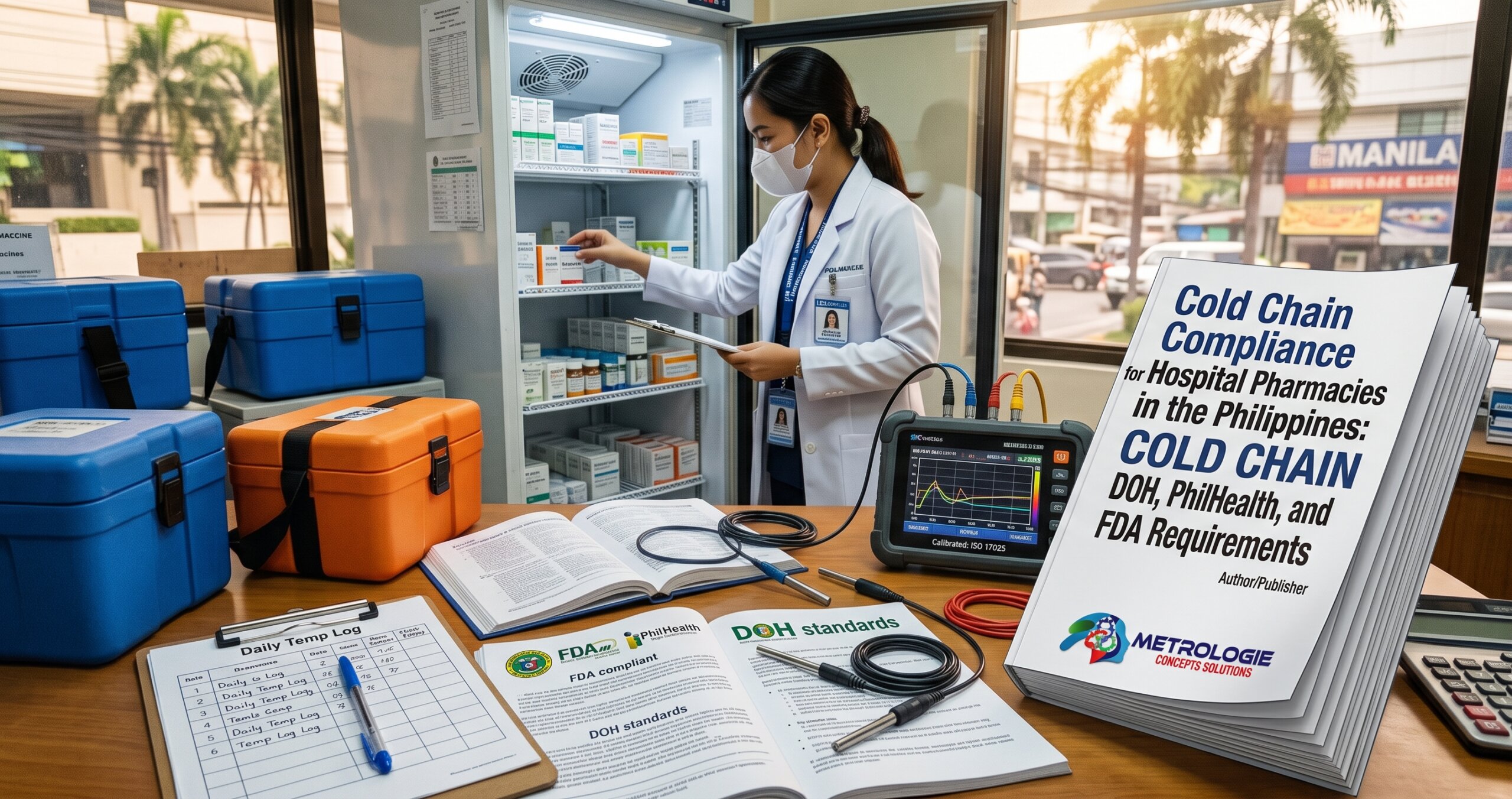
The hospital pharmacist in the Philippines operates at the intersection of multiple regulatory authorities, each with its own set of requirements for pharmaceutical cold chain management — and none of them perfectly aligned with the others.
The Department of Health issues the hospital’s Licence to Operate and sets baseline standards for hospital pharmacy cold storage. The Food and Drug Administration applies FDA Circular 2021-003 and cold chain management requirements that align with WHO Good Distribution Practice. PhilHealth, through its GAMOT programme and hospital accreditation requirements, links reimbursement eligibility to compliance documentation. <cite index=’15-1′>The Hospital Pharmacy is organized in accordance with the minimum requirements set by the FDA, and the One-Stop Shop Licensure of the Health Facilities and Services Regulatory Bureau (HFSRB).</cite> And on top of all of these, hospital-specific regulatory bodies — the Philippine Blood Coordination Network for blood banks, the DOH Health Facilities and Services Regulatory Bureau for specialty care — add their own cold chain requirements for specific pharmaceutical categories.
For a hospital pharmacy director or chief pharmacist trying to build a compliant cold chain programme, this regulatory landscape is genuinely complex — not because any single requirement is unreasonable, but because the requirements come from multiple sources with different inspection schedules, different documentation formats, and different compliance thresholds.
This article is the most comprehensive, Philippines-specific guide to hospital pharmacy cold chain compliance available. It maps the complete regulatory landscape across DOH, FDA, and PhilHealth, explains what each authority requires for pharmaceutical cold chain management, and provides practical guidance on building a cold chain compliance programme that satisfies all three simultaneously — with the thermal mapping, calibration, monitoring, and documentation framework that makes each inspection and accreditation review straightforward rather than stressful.
| Why Hospital Pharmacy Cold Chain Is Uniquely DemandingHospital pharmacies face cold chain demands that are more complex than pharmaceutical distributors in three important ways:1. Product variety: A hospital pharmacy may simultaneously store vaccines (2°C–8°C), chemotherapy agents (specific temperature requirements per drug), blood products (1°C–6°C), and standard pharmaceuticals (CRT or refrigerated) — each with different temperature requirements, regulatory standards, and monitoring obligations2. Patient safety stakes: Temperature excursions in a hospital pharmacy may directly affect patient treatment outcomes — particularly for oncology, blood bank, and critical care medications where no substitute product can easily be procured3. Regulatory intersection: Hospital pharmacies are inspected by multiple bodies (DOH, FDA, PhilHealth) with partially overlapping, partially distinct cold chain requirements — requiring compliance documentation that satisfies all simultaneously |
1. The Philippine Hospital Pharmacy Regulatory Landscape
Understanding which regulatory authority governs which aspect of hospital pharmacy cold chain compliance is the first step in building a programme that satisfies all requirements without redundant effort.
The Department of Health (DOH): Hospital Licensing and Baseline Standards
The DOH, through its Health Facilities and Services Regulatory Bureau (HFSRB), is the primary licensing authority for hospitals in the Philippines. The DOH License to Operate (LTO) for hospitals includes minimum standards for hospital pharmacy operations — covering facility requirements, staffing, equipment, and operational procedures. Cold chain management is a component of these standards: DOH-licensed hospitals must demonstrate that pharmaceutical storage meets the temperature requirements applicable to the products stored.
DOH hospital licensing inspections assess: the physical adequacy of cold storage facilities (adequate refrigeration for the product types stored); the presence of calibrated temperature monitoring systems; and evidence of temperature record-keeping consistent with good pharmaceutical storage practice. DOH inspectors do not typically require the full IQ/OQ/PQ thermal mapping documentation package that FDA cold chain inspections may examine — but they expect to see functioning, calibrated monitoring equipment and systematic temperature records.
<cite index=’33-1′>The accreditation of GAMOT Facilities shall be in consonance with the DOH or FDA LTO schedule and accreditation requirements.</cite> This linkage means that the DOH LTO is a prerequisite for PhilHealth GAMOT accreditation — failure to maintain the DOH LTO (through lapsed licensure or failed compliance) directly affects the hospital pharmacy’s PhilHealth reimbursement eligibility.
The Food and Drug Administration Philippines: FDA Circular 2021-003
The Philippine FDA exercises authority over pharmaceutical product quality and storage conditions through its regulation of pharmaceutical establishments. Hospital pharmacies that store and dispense temperature-sensitive medications — biologics, vaccines, chemotherapy agents, refrigerated pharmaceuticals — must comply with the pharmaceutical storage and cold chain management requirements of FDA Circular 2021-003.
FDA cold chain compliance requirements for hospital pharmacies, as derived from FDA Circular 2021-003 and its WHO GDP reference documents, include:
- Temperature-controlled storage that maintains required temperatures for all pharmaceutical product categories handled
- Continuous temperature monitoring with alarm capability for pharmaceutical cold rooms and refrigerators
- PAB-accredited calibration of all monitoring sensors on an annual basis
- Qualification documentation (thermal mapping) for cold rooms used for pharmaceutical storage
- Temperature excursion reporting and corrective action procedures
- Personnel training in cold chain management procedures
FDA inspections of hospital pharmacies apply these requirements — and the inspection documentation requirements are substantively more detailed than DOH licensing inspections. An FDA cold chain inspection of a hospital pharmacy will typically examine calibration certificates, thermal mapping reports (or their absence), temperature monitoring records, and excursion response records.
PhilHealth: Hospital Accreditation and GAMOT Programme
The Philippine Health Insurance Corporation (PhilHealth) accredits hospitals and health facilities to participate in the National Health Insurance Programme. Hospital accreditation with PhilHealth is a commercial imperative for virtually all Philippine hospitals — without PhilHealth accreditation, the hospital cannot receive reimbursement for services covered by the National Health Insurance Programme.
<cite index=’4-1′>The following FDA and/or DOH-licensed facilities as drug retailer shall be eligible to apply for PhilHealth accreditation to operate as a GAMOT Facility: Retail drug stores or pharmacies; Hospital pharmacies; Primary care facilities with drug dispensing capacity.</cite> The GAMOT programme, launched through PhilHealth Circular 2025-0013, enables hospital pharmacies to dispense medications to PhilHealth members with direct reimbursement — a significant new revenue stream and patient access mechanism for hospital pharmacies.
PhilHealth accreditation requirements for hospital pharmacies as GAMOT facilities include: a valid DOH LTO (or FDA LTO as applicable); compliance with IT system requirements for claims processing; and the standard PhilHealth performance commitment. The PhilHealth requirements do not currently specify detailed cold chain documentation requirements — the cold chain compliance obligations come from DOH and FDA. However, the PhilHealth accreditation linkage to DOH/FDA licensing means that cold chain non-compliance that jeopardises the DOH or FDA licence indirectly threatens PhilHealth accreditation.
DOH Department Order No. 2025-0244: Pharmaceutical Quality Guidelines
<cite index=’8-1′>The Department of Health (DOH) has issued Department Order No. 2025-0244, which provides guidelines for managing the safety, efficacy, and quality of pharmaceutical products procured by the DOH. This order aligns with new FDA reforms to ensure that essential medicines meet high standards throughout the supply chain, particularly in public health facilities. Monitoring compliance with GDP and GSP is conducted monthly using standardized forms.</cite>
For government hospital pharmacies receiving DOH-procured pharmaceutical products, this order adds supply chain compliance monitoring obligations — including GDP (Good Distribution Practice) compliance monitoring — to the existing cold chain management requirements. Monthly standardised compliance monitoring using DOH-specified forms is now required for facilities handling DOH-procured medicines.
2. Cold Chain Requirements by Pharmaceutical Category in Hospital Pharmacies
The cold chain requirements for a hospital pharmacy are more complex than those for a pharmaceutical distributor, because a hospital pharmacy typically handles multiple pharmaceutical categories with different temperature requirements — and potentially different regulatory standards for each category.
| Pharmaceutical Category | Required Storage Temperature | Regulatory Standard | Special Hospital Pharmacy Considerations |
| Standard refrigerated pharmaceuticals (insulin, liquid antibiotics, eye drops) | 2°C to 8°C | FDA Circular 2021-003; WHO GDP; product label requirement | Most common hospital pharmacy cold room category; highest risk from tropical Philippine ambient during power failures |
| Blood and blood products (whole blood, packed red cells, FFP, platelets) | 1°C to 6°C (whole blood, pRBC); −18°C or colder (FFP); 20°C to 24°C with continuous agitation (platelets) | Philippine Blood Coordination Network (PBCN); AABB standards; DOH blood bank standards | Three distinct temperature requirements within one blood bank; thermal mapping must address each separately; dual-sensor monitoring strongly recommended |
| Vaccines (national immunisation programme and private) | 2°C to 8°C (most vaccines); −20°C or colder (OPV, varicella) | WHO Expanded Programme on Immunisation; DOH immunisation guidelines; FDA Circular 2021-003 | Freeze sensitivity is as important as heat — VVM monitoring; ice pack conditioning protocols; separate freeze indicator documentation |
| Chemotherapy and biologic agents | Product-specific (2°C–8°C most common; some require freezing; some are CRT) | FDA product registration conditions; oncology protocols; manufacturer storage requirements | Many oncology biologics have zero tolerance for temperature excursions — monitoring and excursion response must be immediate; separate oncology cold room or dedicated refrigerator strongly recommended |
| Radiopharmaceuticals (nuclear medicine) | Product-specific and time-critical (short half-life products) | Philippine Nuclear Research Institute (PNRI); FDA | Highly specialised; typically handled by dedicated nuclear medicine departments; temperature and radiation shielding requirements combined |
| Controlled temperature (CRT) pharmaceuticals (most oral medications) | 15°C to 30°C (preferred 20°C–25°C) | FDA Circular 2021-003; WHO GDP; product label requirement | Ambient Philippine summer temperatures may exceed 30°C upper limit — dispensing area and drug storage room must be adequately air-conditioned and monitored |
| Nutritional products and parenterals | 2°C to 8°C for prepared parenteral nutrition; specific requirements for commercial parenteral products | FDA; Philippine Society for Parenteral and Enteral Nutrition (PSPHEN) guidelines | Prepared parenteral nutrition has very short stability windows — temperature control from preparation through administration is time-critical |
3. Thermal Mapping for Hospital Pharmacies: What’s Required and When
Thermal mapping for hospital pharmacy cold rooms follows the same IQ/OQ/PQ methodology covered in Article 27, but the specific requirements, study design, and documentation format reflect the hospital pharmacy’s unique regulatory position at the intersection of DOH, FDA, and specialist healthcare standards.
Which Storage Areas Need Thermal Mapping
For a hospital pharmacy, the priority order for thermal mapping reflects the patient safety risk and regulatory scrutiny associated with each storage area:
- Priority 1 — Blood bank refrigerators and freezers: The highest patient safety risk in hospital pharmacy cold chain. Blood products are irreplaceable — a patient needing a specific blood type and blood component cannot wait for an alternative product to be procured if the existing stock is compromised. Blood bank cold room mapping should be the first thermal mapping study conducted by any hospital pharmacy that has not yet mapped its storage areas.
- Priority 2 — Oncology biologic refrigerators: Chemotherapy biologics and monoclonal antibodies are among the most temperature-sensitive and most expensive pharmaceutical products in the hospital pharmacy. A single vial of certain oncology biologics may cost ₱50,000 to ₱500,000 or more. Temperature excursions in oncology cold storage represent both patient safety risk (compromised treatment efficacy) and significant financial loss.
- Priority 3 — Vaccine cold chain storage: Hospital pharmacies managing vaccine stocks for in-patient immunisation programmes, outpatient clinics, or national immunisation programme distribution must demonstrate cold chain compliance for vaccine storage — particularly since the WHO and DOH have specific vaccine cold chain documentation requirements.
- Priority 4 — Main pharmaceutical refrigerators: Cold rooms and refrigerators storing standard refrigerated pharmaceuticals (insulin, liquid antibiotics, eye drops, protein-based medications) require thermal mapping as part of FDA cold chain compliance demonstration.
- Priority 5 — CRT dispensing and storage areas: Hospital dispensing counters, drug storage rooms, and satellite pharmacy locations that maintain temperature-sensitive CRT medications must demonstrate that ambient temperatures remain within the 15°C to 30°C range — particularly critical during Philippine summer when air conditioning failures can drive room temperatures above this limit.
The Hospital Pharmacy OQ Mapping Study: Special Considerations
Hospital pharmacy thermal mapping studies differ from standard pharmaceutical warehouse mapping in several important respects:
- Operational continuity constraints: A hospital pharmacy cannot suspend operations for a 72-hour mapping study in the same way a pharmaceutical warehouse can be closed for qualification activities. Hospital pharmacy cold rooms must remain accessible for patient care during the mapping study. The study design must accommodate normal operational access patterns — including frequent medication dispensing from refrigerators throughout the day and night.
- High door-opening frequency: Hospital pharmacy refrigerators may be opened 20 to 50 times per day during normal operations — far more frequently than pharmaceutical warehouse cold rooms. The OQ mapping study must simulate this operational door-opening frequency to produce data representative of actual worst-case cold room performance.
- Blood bank cold room specifics: Blood bank cold rooms require specific mapping considerations — the temperature distribution within the blood bank refrigerator must account for product stacking patterns (blood bags have specific stacking requirements for both circulation and product integrity), the defrost cycle timing and its temperature impact, and the door-opening pattern associated with blood issue (which may include emergency middle-of-the-night access for urgent surgical cases).
- Multi-temperature-zone facilities: Hospitals with combined pharmacy and blood bank areas may have refrigerators operating at different temperature setpoints in close proximity. The mapping study design must ensure that sensors are appropriately allocated across all temperature zones.
The Philippine Summer Priority for Hospital Pharmacy Mapping
As established throughout this article series, the Philippine summer (March to May) creates the most demanding cold chain compliance conditions of the year. For hospital pharmacies, this seasonal challenge is compounded by several hospital-specific factors:
- Hospital ventilation systems are typically running at maximum capacity during summer, and any HVAC failure that reduces cooling of the pharmacy area will drive temperatures toward the upper limits faster than in a dedicated cold storage facility
- Patient volumes in many Philippine hospitals increase during summer — increasing the demand on pharmacy cold chain through higher medication dispensing volumes and more frequent cold room access
- Power supply reliability in some provinces and cities served by public hospitals may be affected during summer — particularly in areas where peak electricity demand strains the grid during the hottest months
Hospital pharmacy thermal mapping should prioritise summer-condition studies — conducted during April or May when ambient temperatures are at peak — to demonstrate compliance under the most challenging conditions the pharmacy cold chain will face.
4. Blood Bank Cold Chain: The Most Demanding Hospital Pharmacy Application
Among all hospital pharmacy cold chain applications, the blood bank presents the most technically demanding compliance requirements. Blood products are irreplaceable medical resources with narrow temperature windows, severe consequences from temperature excursions, and patient safety stakes that are immediate and direct.
The Three Temperature Zones of a Blood Bank
A complete blood bank cold storage system requires three distinct temperature-controlled environments, each with different temperature requirements and different thermal mapping protocols:
Zone 1: Blood Refrigerator (1°C to 6°C)
Whole blood and packed red blood cells are stored at 1°C to 6°C — a 5°C acceptance window that is tighter than standard pharmaceutical cold room requirements (+2°C to +8°C). This tighter window is specifically intended to maximise the safety margin against both:
- Upper limit breach (above 6°C): At temperatures above 6°C, bacterial growth in blood products accelerates; haemolysis (red blood cell destruction) increases; and the product’s therapeutic effectiveness decreases. The 6°C upper limit reflects the clinical safety boundary for stored blood.
- Lower limit breach (below 1°C): At temperatures below 1°C (near freezing), red blood cells can begin to lyse (rupture). A blood unit exposed to near-freezing temperatures is not clinically safe for transfusion.
Thermal mapping of blood refrigerators must address both risks — identifying both the hot spots that approach the 6°C upper limit AND the cold spots near the evaporator coil that may approach the 1°C lower limit.
Zone 2: Blood Freezer (−18°C or Colder) for FFP and Cryoprecipitate
Fresh Frozen Plasma (FFP) and cryoprecipitate must be maintained at −18°C or colder to preserve clotting factor activity. Thermal mapping of blood freezers follows the same methodology as any frozen storage mapping — with particular attention to:
- Power failure holdover time: How quickly does the blood freezer warm above −18°C when power is interrupted? Given typhoon season power disruption risk, this holdover time drives emergency backup planning for the blood bank.
- Defrost cycle temperature impact: Does the automatic defrost cycle cause temperatures to rise above −18°C? If so, how long does the excursion last and how quickly does the freezer recover?
- Load temperature recovery: After blood products are added to the freezer (for example, after receiving a fresh blood collection batch), how quickly does the freezer recover to setpoint? Inadequate recovery time creates a prolonged temperature elevation risk.
Zone 3: Platelet Agitator (20°C to 24°C with Continuous Agitation)
Platelets have the most unusual storage requirement in the blood bank: they must be stored at 20°C to 24°C with continuous agitation (rotation or rocking) to prevent platelet aggregation and maintain therapeutic activity. This temperature range — between room temperature and body temperature — means platelet storage occurs in the warm end of the temperature spectrum, making it uniquely vulnerable to heat from an improperly air-conditioned environment.
For hospital pharmacies in the Philippines, platelet storage presents a specific summer challenge: maintaining 20°C to 24°C when the ambient temperature is 35°C to 38°C requires active cooling of the agitator environment — either a dedicated temperature-controlled agitator unit or a room that is adequately cooled to keep the agitator’s surroundings within range.
Thermal mapping of the platelet storage environment assesses whether the agitator’s surroundings maintain the 20°C to 24°C range under peak Philippine summer ambient conditions.
Blood Bank Monitoring: The Dual-Sensor Recommendation
For blood bank cold storage, a single monitoring sensor per refrigerator or freezer is the minimum compliance standard — but dual-sensor monitoring (two independent sensors, each with its own alarm, monitoring the same storage space) is strongly recommended. The patient safety rationale for dual-sensor monitoring in blood banking is straightforward: if a single sensor fails (battery exhaustion, probe malfunction, connection loss), blood product storage is unmonitored until the failure is detected. With dual-sensor monitoring, a sensor failure triggers a system alert — and the second sensor continues monitoring, ensuring no gap in product protection.
5. Vaccine Cold Chain in Hospital Pharmacies
Hospital pharmacies managing vaccine stocks — whether for in-patient vaccination, outpatient immunisation clinics, or national immunisation programme (NIP) distribution — face a vaccine cold chain compliance framework that is distinct from general pharmaceutical cold chain requirements.
WHO/DOH Vaccine Cold Chain Standards
Vaccine cold chain in the Philippines is governed by WHO Expanded Programme on Immunisation (EPI) guidelines as adapted by the DOH National Immunisation Programme. These guidelines specify: storage temperatures (2°C to 8°C for most vaccines; −20°C or colder for OPV and varicella); Vaccine Vial Monitor (VVM) monitoring for applicable vaccines; cold chain equipment requirements (WHO-prequalified equipment for public sector cold chain); and temperature recording requirements including the use of standardised vaccine temperature monitoring logs.
The DOH National Immunisation Programme’s cold chain management requirements are significantly more prescriptive than the general FDA Circular 2021-003 cold chain framework — particularly for public hospitals that are part of the national vaccine distribution network. Compliance with NIP cold chain standards includes: use of WHO PQS-prequalified cold chain equipment for public sector facilities, standardised temperature monitoring logs, and cold chain workers trained in vaccine temperature management.
The Freeze Risk for Hospital Vaccines
Unlike most pharmaceutical cold chain applications where the primary risk is heat exposure, vaccine cold chain must address freeze risk as an equally serious concern. Many vaccines — including DTP-containing vaccines, hepatitis B, Hib, IPV, and PCV — are severely damaged by freezing. A single freeze-thaw event can completely destroy the immunogenicity of these vaccines, making them ineffective for patient protection even though they appear physically intact.
In Philippine hospital pharmacy practice, freeze damage most commonly occurs from:
- Poorly conditioned ice packs placed in direct contact with freeze-sensitive vaccines during transport or storage
- Refrigerator cold spots near the evaporator where temperatures fall below 0°C — thermal mapping identifies these zones, which must be excluded from vaccine storage
- Thermostat malfunction that drives refrigerator temperatures below 0°C
Thermal mapping of vaccine refrigerators must specifically identify any zones where temperatures fall below 0°C — and these freeze zones must be marked as no-storage zones for freeze-sensitive vaccines, with product placement SOPs updated accordingly.
The Shake Test for Freeze-Damaged Vaccines
For vaccines suspected of freeze exposure (including any vaccine stored in a zone identified as potentially sub-zero in thermal mapping studies, or any vaccine involved in a suspected freeze excursion), the Shake Test provides a simple visual assessment of freeze damage:
- A freeze-sensitive vaccine that has been frozen and thawed will show visible flocculation (white clumps or aggregates) that does not re-suspend upon shaking
- An unaffected control vial (same vaccine type, known unaffected) will show a uniformly turbid suspension that re-suspends upon shaking
- If the suspect vial shows persistent flocculation after shaking while the control does not, the suspect vial has been freeze-damaged and must be discarded
All pharmacy staff handling vaccines should be trained in the Shake Test procedure. The decision to discard freeze-suspected vaccines should be documented — recording which vials were tested, the result, and the disposal record.
6. Building a Compliant Hospital Pharmacy Cold Chain Programme
For hospital pharmacy directors and chief pharmacists building or upgrading their cold chain compliance programme, the following framework integrates the regulatory requirements from DOH, FDA, and PhilHealth into a practical implementation sequence.
Step 1: Map Your Cold Storage Inventory
Before building compliance documentation, know what you have. Create a complete inventory of every cold storage area in the hospital pharmacy:
- Main pharmaceutical cold room(s): temperature range, volume, product types stored
- Blood bank refrigerator(s): temperature range, product types (whole blood, pRBC)
- Blood bank freezer(s): temperature range, product types (FFP, cryoprecipitate)
- Platelet agitator(s): temperature range and agitation equipment
- Vaccine refrigerator(s): temperature range, vaccine types stored
- Oncology/biologic refrigerator(s): temperature range, product types
- Dispensing area and medication storage rooms: ambient CRT storage conditions
This inventory drives the qualification and monitoring programme scope — every cold storage area on the list needs IQ/OQ/PQ qualification and continuous monitoring.
Step 2: Commission Thermal Mapping Studies by Priority
Based on the patient safety priority order in Section 3, commission thermal mapping studies for each storage area. For hospitals with no previous thermal mapping, the recommended sequence is:
- Blood bank refrigerator(s) and freezer(s)
- Oncology biologic refrigerator(s)
- Vaccine cold room or refrigerator(s)
- Main pharmaceutical cold room(s)
- CRT storage areas (if there are concerns about summer temperature compliance)
Each thermal mapping study should be conducted during Philippine summer ambient conditions (April to May) for the OQ phase. Summer mapping should be prioritised regardless of when the facility’s DOH or FDA licence renewal cycle falls.
Step 3: Position Monitoring Sensors at Thermal Mapping Hot Spots
After each thermal mapping study, the permanent monitoring sensor for that storage area must be repositioned — if necessary — to the hot spot identified in the study. Blood bank refrigerators, with their narrow 1°C to 6°C window and dual freeze/heat risk, should have dual monitoring sensors: one at the hot spot (highest temperature zone) and one at the cold spot (lowest temperature zone near the evaporator).
Step 4: Calibrate All Monitoring Sensors
Ensure that every monitoring sensor in every cold storage area has a current, PAB-accredited calibration certificate. For blood bank and oncology refrigerators, semi-annual calibration (every 6 months) is recommended given the patient safety criticality of these storage areas. For standard pharmaceutical cold rooms and vaccine refrigerators, annual calibration is the minimum standard.
Step 5: Develop or Update SOPs
Hospital pharmacy cold chain SOPs must cover all the scenarios specific to the hospital context — in addition to the standard pharmaceutical cold chain SOPs described in Article 30:
- Blood issue and emergency blood request protocol: Temperature management during blood product retrieval and transport to the clinical area
- Vaccine receipt and verification: Temperature check at receipt, VVM check, rejection criteria for potentially compromised vaccines
- Chemotherapy preparation cold chain: Temperature management during preparation, transport, and administration of oncology biologics
- Platelet management: Agitator operation, temperature monitoring, platelet lifespan tracking
- Temperature excursion response — blood products: Specific response for blood product excursions, including suspension of blood issue pending product assessment
Step 6: Train All Pharmacy Staff
Cold chain training in a hospital pharmacy must cover all staff who interact with temperature-sensitive products — not just the pharmacy staff but also nurses who manage ward medication refrigerators, technicians who handle blood product issue, and any others in the medication temperature chain. Training records must document: who was trained, when, by whom, and on what topics.
| Metrologie Solutions Philippines: Hospital Pharmacy Cold Chain SupportWe provide thermal mapping studies, PAB-accredited calibration, and cold chain compliance documentation for hospital pharmacies throughout the Philippines — from single-unit blood bank refrigerators to multi-area hospital pharmacy cold chain systems.Our studies are designed for the Philippine hospital pharmacy context: summer-season priority, high door-opening frequency simulation, dual-risk (freeze and heat) mapping for blood bank and vaccine storage, and documentation formatted for DOH, FDA, and PhilHealth accreditation review.Contact us at metrologiesolutions.com to discuss your hospital pharmacy cold chain compliance programme. |
7. Documentation for Hospital Pharmacy Cold Chain: DOH, FDA, and PhilHealth
The documentation requirements for hospital pharmacy cold chain compliance span all three regulatory bodies — each with slightly different documentation expectations. The following table maps key documentation categories to the relevant authority.
| Documentation Category | DOH LTO Inspection | FDA Cold Chain Inspection | PhilHealth GAMOT Accreditation |
| Thermal mapping reports (IQ/OQ/PQ) | Expected for main cold rooms; blood bank documentation checked | Required — IQ/OQ/PQ documentation expected; PAB-accredited calibration certificates reviewed | Not directly reviewed, but indirectly required through FDA LTO currency |
| Temperature monitoring records | Temperature logs for the inspection period reviewed | Electronic monitoring records with alarm log reviewed; data integrity assessed | Not directly reviewed |
| Calibration certificates — monitoring sensors | Calibration certificates expected to be current | PAB-accredited certificates required; measurement uncertainty must be stated | Not directly reviewed |
| Blood bank cold chain documentation | Blood bank refrigerator/freezer temperature logs reviewed | Blood bank refrigerator mapping and monitoring documentation reviewed | Not directly reviewed (separate blood bank accreditation process) |
| Vaccine cold chain documentation | NIP cold chain compliance forms reviewed for public hospitals | Vaccine cold room mapping and monitoring documentation; VVM records | Not directly reviewed |
| Temperature excursion records | Excursion response records may be reviewed | Excursion reports and CAPA records reviewed for completeness | Not directly reviewed |
| SOPs | SOPs for pharmacy operations reviewed | Cold chain-specific SOPs reviewed | Standard PhilHealth operational SOPs |
| Staff training records | Pharmacist PRC licences verified; training records for cold chain staff | Cold chain training records for pharmacy and relevant clinical staff | Staff qualification requirements for GAMOT facility |
| FDA LTO (current) | Prerequisite for DOH hospital licence | Core FDA document | Required for GAMOT accreditation |
| DOH LTO (current) | Core DOH document | Referenced in FDA compliance assessment | Required for PhilHealth accreditation |
8. Frequently Asked Questions: Hospital Pharmacy Cold Chain
Do small rural health units (RHUs) and barangay health centres need thermal mapping?
RHUs and barangay health centres that store temperature-sensitive medications — particularly vaccines as part of the national immunisation programme — have cold chain management obligations under DOH NIP guidelines. The NIP cold chain requirements for RHUs focus on using WHO PQS-prequalified equipment, monitoring temperatures with standardised logs, and following cold chain worker training curricula developed by the DOH. Formal thermal mapping (IQ/OQ/PQ) is not currently required for RHU-level facilities under NIP guidelines. However, thermal mapping of the vaccine refrigerator at a rural health unit would still be valuable for identifying freeze zones near the evaporator — the most common source of vaccine damage in field cold chain settings in the Philippines.
Our hospital pharmacy operates under the hospital’s DOH LTO. Does the pharmacy need a separate FDA LTO?
This depends on the hospital’s specific operations. Hospitals with in-house pharmacies that dispense medications to in-patients typically operate under the hospital’s overall DOH LTO, which covers hospital pharmacy operations as a component of the hospital’s licence. However, if the hospital pharmacy also operates as a retail pharmacy (dispensing to out-patients or the general public), a separate FDA drugstore licence may be required. The GAMOT programme specifically mentions hospital pharmacies as eligible facilities with FDA or DOH LTO — clarifying that either licensing pathway is acceptable for GAMOT accreditation. Consult with the FDA and DOH for the specific licensing requirement applicable to your pharmacy’s operational scope.
What happens to our PhilHealth accreditation if we fail a DOH cold chain inspection?
A failed DOH cold chain inspection that results in conditions, restrictions, or suspension of the hospital’s LTO directly affects PhilHealth accreditation, because PhilHealth accreditation is contingent on a valid DOH LTO. <cite index=’33-1′>The accreditation shall be in consonance with the DOH or FDA LTO schedule, and accreditation requirements.</cite> This means that maintaining continuous, uninterrupted DOH LTO validity is essential not only for legal hospital operation but for PhilHealth reimbursement eligibility. A cold chain compliance gap that leads to DOH LTO suspension or conditions can cascade into a PhilHealth accreditation interruption — with significant financial consequences for the hospital.
Our blood bank refrigerator failed its annual calibration check — what are our obligations?
An out-of-tolerance calibration finding for a blood bank refrigerator monitoring sensor triggers the following obligations: immediately document the OOT finding formally; assess the period during which the sensor may have been reading inaccurately (since the last calibration, or since a detectable drift began); assess whether any blood product temperature excursions may have occurred during the affected period that were not detected due to sensor inaccuracy; if potential undetected excursions are identified, assess the impact on blood product quality (conservatively — blood products for which the actual storage conditions cannot be verified should be quarantined pending assessment); replace or recalibrate the sensor to a verified accurate state; and document the entire investigation, assessment, and corrective action as part of the blood bank’s deviation management records.
How do we handle temperature monitoring for medication refrigerators on patient wards?
Ward medication refrigerators — used for storing patient-specific medications, prepared medications, and some refrigerated medications dispensed to ward staff — are an extension of the hospital pharmacy cold chain that is often poorly monitored. These refrigerators may not have continuous electronic monitoring, may be accessed by nursing staff with limited cold chain training, and may be located in areas without temperature alarm infrastructure. The minimum acceptable standard for ward medication refrigerators holding temperature-sensitive medications is: a calibrated thermometer with continuous recording (or at least twice-daily manual readings with documentation), a maximum-minimum thermometer to capture temperature excursions between readings, and nursing staff training on the importance of refrigerator temperature management and what to do if a temperature excursion is suspected. For wards storing high-risk medications (oncology biologics, critical care medications), continuous electronic monitoring should be implemented.
Conclusion: Meeting Three Authorities’ Requirements with One Well-Built Programme
The complexity of hospital pharmacy cold chain compliance in the Philippines — navigating DOH, FDA, and PhilHealth requirements simultaneously — is real but manageable. The key insight is that all three authorities are ultimately asking for the same fundamental thing: demonstrable, documented evidence that temperature-sensitive pharmaceutical products are stored under conditions that protect their safety, efficacy, and quality for patient use.
A well-built hospital pharmacy cold chain programme — with thermal mapping studies that establish qualification, continuous monitoring with calibrated sensors at the hot spot position, systematic temperature records, competent staff, and complete documentation files — satisfies all three authorities’ requirements simultaneously. It is not three separate compliance programmes; it is one integrated programme whose documentation is organised to present effectively to each authority’s specific review focus.
For Philippine hospital pharmacies that are building this programme from the beginning, the starting point is the thermal mapping study — particularly for blood bank and oncology cold storage where patient safety stakes are highest and where inadequate cold chain protection has the most immediate consequences. Metrologie Solutions Philippines provides thermal mapping studies designed for the Philippine hospital pharmacy context: summer-season studies that capture worst-case performance, blood bank dual-risk mapping, vaccine freeze-zone identification, and documentation formatted for DOH licensing, FDA inspection, and PhilHealth accreditation review.
| Build Your Hospital Pharmacy Cold Chain Compliance ProgrammeContact Metrologie Solutions Philippines to discuss thermal mapping studies for your hospital pharmacy cold storage — blood bank refrigerators and freezers, vaccine cold rooms, oncology biologic refrigerators, and main pharmaceutical cold rooms.We serve hospital pharmacies throughout the Philippines, from tertiary medical centres to provincial hospitals — with Philippine-condition mapping under summer ambient conditions, PAB-accredited calibration, and documentation that satisfies DOH, FDA, and PhilHealth requirements.Website: metrologiesolutions.com | Services: Hospital Pharmacy Thermal Mapping · Blood Bank Cold Room Mapping · Calibration · Training |
| About Metrologie Solutions PhilippinesMetrologie Solutions Philippines provides thermal mapping, PAB-accredited calibration, and cold chain compliance documentation services for hospital pharmacies and blood banks throughout the Philippines. Our studies meet DOH hospital licensing standards, FDA cold chain management requirements, and PhilHealth GAMOT accreditation documentation needs. We help hospital pharmacy teams build complete cold chain compliance files — from IQ/OQ/PQ qualification through annual monitoring sensor calibration, seasonal remapping, and excursion management documentation.Website: metrologiesolutions.com | Services: Hospital Pharmacy Thermal Mapping · Calibration · Cold Chain Compliance · Training |