If you store pharmaceuticals, food products, vaccines, or any temperature-sensitive material in the Philippines, there is one question that your quality assurance team, regulatory inspector, or logistics partner will eventually ask you: Have you done your thermal mapping?
For many businesses, this question brings uncertainty. Some have heard the term but are not sure what it actually means. Others know it involves temperature — but are unclear about why it matters, what the process looks like, or when Philippine law requires it.
This guide answers all of those questions in plain language. Whether you are a QA manager preparing for an FDA inspection, a warehouse operator commissioning a new cold room, a logistics company building out a cold chain, or a food business pursuing HACCP certification — this article is your complete, authoritative introduction to thermal mapping in the Philippines.
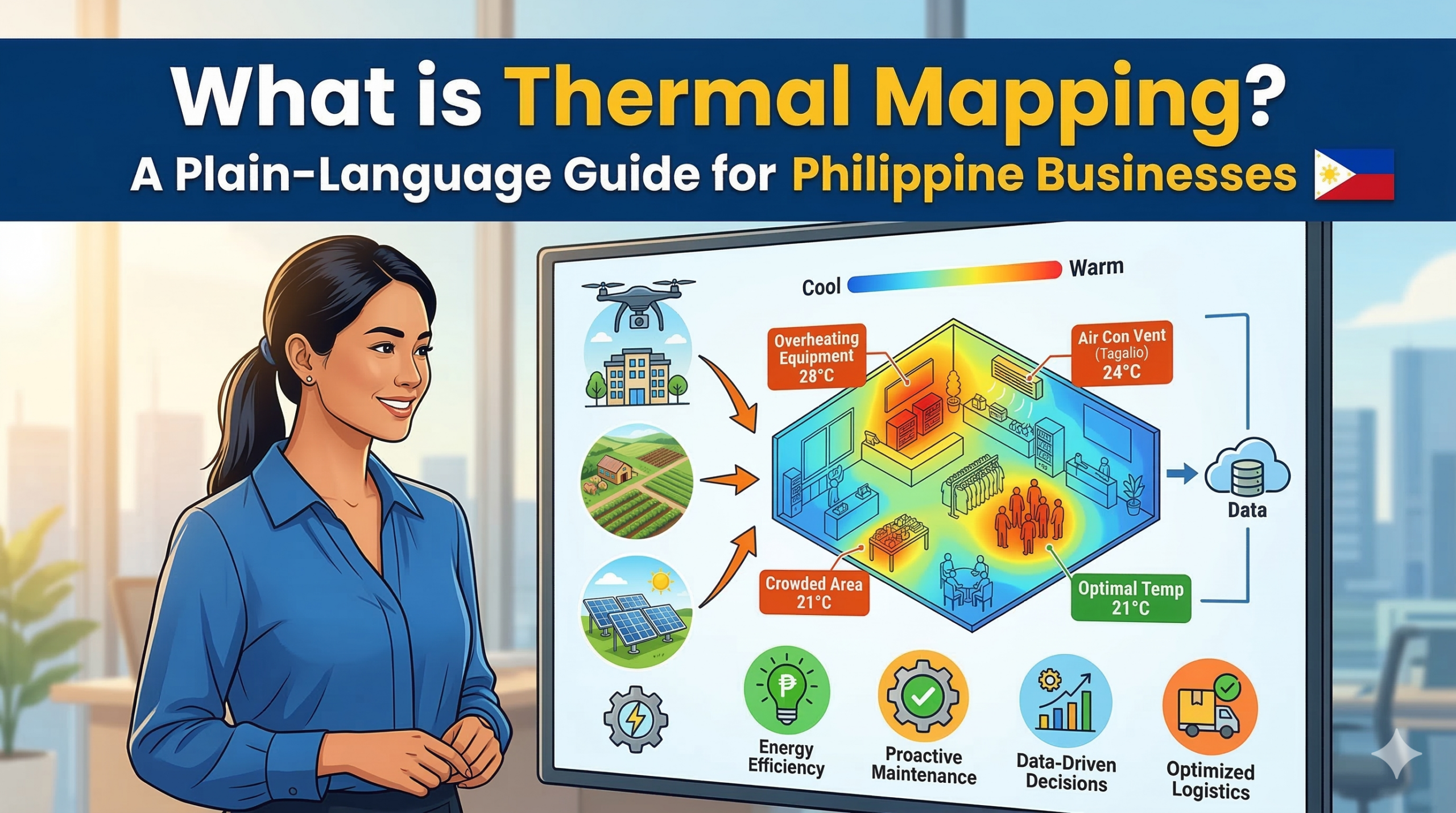
| Quick AnswerThermal mapping (also called temperature mapping) is a documented scientific study that measures and records temperature — and sometimes humidity — at multiple points inside a storage area over a period of time. The goal is to prove that every corner, shelf, and zone of that space consistently stays within the required temperature range. It identifies hot spots, cold spots, and temperature variations so they can be corrected before products are stored there. |
What This Guide Covers
- What thermal mapping is and how it works
- Why thermal mapping matters for Philippine businesses
- The difference between thermal mapping and temperature monitoring
- What happens during a thermal mapping study
- Equipment used: data loggers, sensors, and calibration
- Philippine regulatory requirements: FDA, DOH, HACCP, and WHO
- Which industries need thermal mapping in the Philippines
- How often you should repeat a mapping study
- What a thermal mapping report looks like
- Common mistakes Philippine businesses make
- How to choose the right thermal mapping service provider
- Frequently Asked Questions
1. What is Thermal Mapping? The Complete Definition
Thermal mapping — also called temperature mapping or temperature distribution study — is a formal, documented process used to characterize the temperature distribution inside a controlled storage environment.
In simpler terms: it is a scientific study that answers the question, “Is every part of this room actually maintaining the temperature we think it is?”
You might assume that if your cold room thermostat is set to 5°C, every corner of that room is at 5°C. In reality, that is almost never true. Temperature is not uniform inside enclosed spaces. Corners near doors may be warmer. Areas close to the cooling unit may be colder. Spots near the ceiling may behave differently from spots near the floor. Zones near walls exposed to direct sunlight — a major factor in the Philippine tropical climate — may show significant temperature elevation.
Thermal mapping identifies all of these variations with scientific precision. The result is a documented, data-backed understanding of how temperature behaves throughout your storage space — under different conditions, at different times of the day, and across different seasons.
The Basic Principle
During a thermal mapping study, calibrated temperature sensors (called data loggers) are placed at multiple points throughout the storage area — at different heights, positions, and distances from walls, doors, and the cooling system. These data loggers record temperature readings continuously over a defined period, typically 24 to 72 hours at a minimum, and sometimes up to a week or longer for larger or more complex spaces.
The data collected from all sensors is then analyzed to identify: the minimum temperature recorded anywhere in the space, the maximum temperature recorded anywhere in the space, the average temperature, the locations of hot spots and cold spots, and any temperature excursions — periods when temperature went outside the acceptable range.
This analysis forms the foundation of your thermal mapping report: a documented record that proves your storage area meets the required temperature conditions for storing your products.
Thermal Mapping vs. Temperature Monitoring: Understanding the Key Difference
One of the most common sources of confusion in the industry is the difference between thermal mapping and temperature monitoring. These are related but fundamentally different activities, and Philippine businesses often need both.
| Thermal Mapping | Temperature Monitoring | |
| Purpose | Validate that the space is suitable for storage | Ongoing surveillance during normal operations |
| When done | Before using the space; after changes | Continuously, every day |
| Duration | One-time study (days to a week) | Permanent, ongoing |
| Number of sensors | Many (distributed throughout) | Few (permanent fixed locations) |
| Output | Validation report & certification | Temperature logs & alarms |
| Regulatory role | Qualification / validation | Compliance monitoring |
Think of thermal mapping as the qualification step and temperature monitoring as the ongoing compliance step. You must map first to know where to place your permanent monitoring sensors — and the mapping study validates that those sensor locations are meaningful and representative of the space.
2. Why Thermal Mapping Matters for Philippine Businesses
The Philippines presents unique challenges for temperature-sensitive storage that make thermal mapping not just a regulatory requirement but a genuine business necessity.
The Philippine Climate Factor
The Philippines is a tropical country with an average annual temperature of 26°C to 32°C and humidity levels regularly exceeding 80%. Unlike temperate countries where ambient conditions support storage environments, Philippine businesses must work against the climate — and that makes temperature control significantly harder.
A cold room in Manila, Cebu, or Davao is constantly fighting ambient heat. Every time a door opens, warm humid air rushes in. Walls exposed to direct sunlight create thermal bridging. Power interruptions — a reality in many parts of the Philippines — cause temperature excursions. The wet season brings high humidity that can affect both temperature distribution and product stability.
None of these challenges are visible to the naked eye. Thermal mapping makes them visible, measurable, and documentable — so your business can address them before they become a product quality failure or a regulatory citation.
Protecting Product Quality and Patient Safety
The most fundamental reason for thermal mapping is product integrity. Temperature-sensitive products degrade when stored outside their required temperature range — sometimes visibly, but often invisibly. A vaccine stored at 12°C instead of 5°C may look identical but have significantly reduced potency. Insulin stored in a hot spot of a pharmacy refrigerator may lose effectiveness. Food products stored in warm zones of a cold warehouse may harbor bacterial growth that is not detectable until a consumer gets sick.
Thermal mapping identifies the risk zones before your products are exposed to them. It is a preventive tool that protects both your customers and your business.
Regulatory Compliance in the Philippines
Philippine businesses are subject to a growing body of regulations that explicitly or implicitly require thermal mapping as part of their compliance obligations. The FDA Philippines (Food and Drug Administration) requires pharmaceutical companies, drug distributors, and cold chain operators to demonstrate that their storage areas maintain the required temperature conditions. This requirement is embedded in FDA Circular No. 2021-003, which revised the guidelines on cold chain management for pharmaceutical products and establishments.
Good Manufacturing Practice (GMP) guidelines — which apply to pharmaceutical manufacturers — require validation of controlled storage environments. The World Health Organization’s technical supplements, which the Philippine FDA references, provide detailed guidance on how temperature mapping studies should be conducted. HACCP (Hazard Analysis and Critical Control Points) frameworks, required for food businesses seeking FDA licensing, require documented temperature control validation for cold storage areas.
| Important Regulatory NoteFDA Circular No. 2021-003 explicitly addresses cold chain management requirements for pharmaceutical establishments in the Philippines. Any pharmaceutical company, drug distributor, or cold chain logistics provider operating in the Philippines should review this circular and ensure their thermal mapping documentation aligns with its requirements. Non-compliance can result in FDA citations, license suspension, or product recalls. |
3. How a Thermal Mapping Study Works: Step by Step
Understanding the thermal mapping process helps you prepare for it, communicate with your service provider, and interpret the results. Here is the standard process followed by reputable thermal mapping service providers in the Philippines.
Phase 1: Planning and Protocol Development
Before any sensor is placed, the thermal mapping team develops a written protocol — a document that defines the scope, objectives, and methodology of the study. The protocol specifies: the storage area to be mapped and its dimensions, the target temperature range (for example, 2°C to 8°C for pharmaceutical cold storage), the number and positions of data loggers, the duration of the study, the acceptance criteria that will determine whether the mapping study passes or fails, and the specific conditions under which the study will be conducted (loaded or unloaded, door operations, HVAC settings).
Developing a proper protocol is not a step to skip. A well-written protocol protects your organization if questions arise later about whether the study was conducted properly.
Phase 2: Equipment Preparation and Calibration
All data loggers and sensors used in the study must be calibrated before deployment. This is a non-negotiable requirement under WHO guidelines and Philippine FDA regulations. Calibration means that each sensor has been verified against a traceable reference standard — ideally one with a certificate of calibration from a Philippine Accreditation Bureau (PAB) accredited laboratory — and confirmed to measure temperature accurately within specified tolerances.
This is where the connection between thermal mapping and metrology becomes clear. Metrology — the science of measurement — is the foundation of thermal mapping. Without calibrated measurement equipment, a thermal mapping study produces numbers that cannot be trusted. A sensor reading 5°C that actually measures 7°C will give your organization false confidence that its storage area is compliant when it may not be.
Phase 3: Sensor Placement
The data loggers are placed throughout the storage area according to the protocol. Sensor placement follows established guidelines — WHO Technical Report Series No. 961, Supplement 8 provides widely accepted guidance on sensor density and positioning. Common placement principles include: sensors at multiple heights (top, middle, bottom of the storage area), sensors near doors, walls, and the cooling unit, sensors in areas identified as high-risk based on the room layout, and a minimum number of sensors per unit volume of space.
For a typical pharmaceutical cold room or warehouse in the Philippines, this means deploying anywhere from 10 to 50 or more sensors depending on the size and complexity of the space.
Phase 4: Data Collection
Once sensors are in place, the study runs for its full planned duration — typically a minimum of 24 to 72 hours for smaller spaces, and up to 7 days for larger warehouses or when seasonal variation must be documented. During this time, sensors record temperature (and sometimes relative humidity) at programmed intervals, typically every 5 to 15 minutes.
Data collection should occur under conditions that represent normal operations — meaning the HVAC system operates normally, doors are opened and closed according to typical patterns, and the room is loaded to a representative level (either empty for Operational Qualification or loaded for Performance Qualification).
Phase 5: Data Analysis and Report Generation
After the study period, all data loggers are retrieved and their data is downloaded and analyzed. The analysis identifies: minimum and maximum temperatures recorded at each sensor location, overall minimum and maximum for the entire space, average temperature across all sensors, standard deviation, temperature gradients between locations, any excursions outside the acceptance criteria, and identification of hot spots and cold spots.
The analysis leads to two key outputs: a recommendation for where to place permanent monitoring sensors (they should be placed at the identified hot and cold spots, since those are the locations where out-of-tolerance conditions are most likely to occur), and a thermal mapping report that documents the entire study, its results, and its conclusions.
Phase 6: Report Review and Approval
The completed thermal mapping report is reviewed by the qualified person or QA manager responsible for the storage area. If the study passes its acceptance criteria, the report is approved and filed as part of the facility’s validation documentation. If the study fails — for example, if temperature excursions were identified that exceed acceptable limits — corrective actions must be taken and a new mapping study conducted after the corrections are implemented.
4. Equipment Used in Thermal Mapping
Data Loggers
The primary instrument in any thermal mapping study is the data logger — a small electronic device that measures, records, and stores temperature data over time. Data loggers used for thermal mapping must meet several criteria: sufficient accuracy (typically ±0.5°C or better), adequate memory to store all readings for the study duration, a battery life that exceeds the study duration, and for pharmaceutical applications, software compliance with data integrity requirements.
There are two main types of data loggers: self-contained loggers that store data internally and are downloaded at the end of the study, and wireless or telemetric loggers that transmit data in real time to a central system. Both types are used in Philippine thermal mapping studies, depending on the application and budget.
Calibration Equipment
As noted above, all data loggers must be calibrated before use. Calibration is performed using reference thermometers with traceability to national or international measurement standards. In the Philippines, traceability chains run through the Philippine Accreditation Bureau (PAB) and ultimately to the International Bureau of Weights and Measures (BIPM). Working with a PAB-accredited calibration laboratory ensures that your thermal mapping study meets the highest standards of measurement traceability.
Humidity Sensors
Many thermal mapping studies in the Philippines also measure relative humidity alongside temperature. This is particularly important for pharmaceutical storage areas, where humidity can affect drug stability, and for food storage areas, where humidity affects shelf life and the risk of mold and bacterial growth. Combination temperature and humidity loggers are commonly used for this purpose.
5. Philippine Regulatory Requirements for Thermal Mapping
Understanding the specific regulatory landscape in the Philippines is essential for any business considering thermal mapping. Here is a summary of the key regulatory frameworks that require or recommend thermal mapping.
FDA Philippines — Pharmaceutical and Cold Chain
The Food and Drug Administration of the Philippines (FDA Philippines) is the primary regulatory body for pharmaceutical products, food, cosmetics, and medical devices. For pharmaceutical companies and cold chain operators, FDA Circular No. 2021-003 provides the most specific guidance on cold chain management, including requirements for temperature validation of storage facilities.
The FDA Philippines also references WHO Good Storage and Distribution Practices guidelines, which include detailed requirements for temperature mapping of storage areas. Pharmaceutical establishments applying for or renewing their License to Operate (LTO) must demonstrate compliance with these requirements.
WHO Technical Guidelines
The World Health Organization has published detailed technical guidance on thermal mapping through its Technical Report Series. WHO TRS No. 961, Annex 9 and Supplement 8 provide step-by-step guidance on temperature mapping of storage areas. These WHO guidelines are referenced by the Philippine FDA and form the international standard against which Philippine pharmaceutical storage facilities are evaluated.
Key WHO requirements include: mapping in both loaded and unloaded conditions for new facilities, seasonal mapping in climates with significant seasonal variation (which applies throughout the Philippines), a minimum study duration appropriate to the size and complexity of the space, and qualified calibrated equipment with documented traceability.
ISPE Good Practice Guide
The International Society for Pharmaceutical Engineering (ISPE) published its Good Practice Guide: Controlled Temperature Chambers (Second Edition, 2021), which provides comprehensive guidance on commissioning, qualification, mapping, and monitoring of controlled temperature storage areas. While this guide was developed for global pharmaceutical engineering practice, it is widely referenced in the Philippines as the technical standard for high-quality thermal mapping studies.
HACCP and Food Safety Regulations
For food businesses in the Philippines, the Hazard Analysis and Critical Control Points (HACCP) system — required for FDA food licensing — mandates documented control of critical control points, including temperature in cold storage. While HACCP does not always specify thermal mapping explicitly, the requirement to demonstrate and document temperature control of storage environments effectively requires a mapping study.
ISO 9001 and Quality Management Systems
Philippine businesses operating under ISO 9001 Quality Management Systems must control and validate their monitoring and measurement equipment and processes. Thermal mapping is a key part of validating temperature-controlled storage as part of the broader quality management system.
| PAB Accreditation and Your Thermal Mapping ProviderWhen selecting a thermal mapping service provider in the Philippines, ensure that the calibration laboratory that certifies the data loggers used in the study is accredited by the Philippine Accreditation Bureau (PAB). PAB accreditation to ISO/IEC 17025 is the internationally recognized standard for testing and calibration laboratory competence. Using non-accredited calibration services puts the validity of your entire thermal mapping study at risk. |
6. Which Philippine Industries Need Thermal Mapping?
Thermal mapping is not limited to a single industry. Any Philippine business that stores temperature-sensitive products — whether required by regulation or driven by quality standards — should consider thermal mapping as a fundamental part of its operations.
Pharmaceutical Companies and Drug Distributors
This is the most heavily regulated sector for thermal mapping in the Philippines. Drug manufacturers, importers, wholesalers, and distributors are all required to demonstrate that their storage facilities maintain the temperature conditions required for the products they handle. This includes ambient temperature storage (controlled room temperature, typically 15°C to 30°C), refrigerated storage (typically 2°C to 8°C for vaccines, insulin, biologics), and frozen storage (typically -20°C or colder for specific biologics).
Hospitals with pharmacies, hospital blood banks, and community drug stores are also increasingly expected to demonstrate temperature compliance through mapping and monitoring.
Vaccine Cold Chain Operators
The vaccine cold chain in the Philippines spans from national cold stores operated by the Department of Health, through regional and provincial health offices, down to rural health units. Every link in this chain must maintain vaccine products within the required temperature range — 2°C to 8°C for most vaccines, and -20°C for others. Thermal mapping of cold rooms, refrigerators, and storage areas at each level of the cold chain is essential to ensuring vaccine potency and program effectiveness.
Food and Beverage Manufacturers and Distributors
The Philippine food industry — including meat processors, dairy producers, seafood companies, beverage manufacturers, and food distributors — relies on cold chain infrastructure that must be validated through thermal mapping. HACCP compliance, export certification, and FDA food licensing all require demonstrated temperature control of processing and storage environments.
Restaurants, catering companies, and food service operators with large cold storage infrastructure are increasingly expected to demonstrate temperature compliance, particularly as food safety enforcement in the Philippines strengthens.
Logistics and Third-Party Logistics (3PL) Providers
Cold chain logistics is a rapidly growing sector in the Philippines, driven by e-commerce, pharmaceutical distribution, and food export requirements. 3PL providers operating temperature-controlled warehouses, refrigerated vehicles, and cold chain distribution networks must map their storage and transport environments to demonstrate compliance with client and regulatory requirements.
Cosmetics and Personal Care Product Manufacturers
Many cosmetic and personal care products are temperature-sensitive. Manufacturers and distributors of these products who operate controlled storage environments should consider thermal mapping as part of their quality assurance framework.
Chemical and Industrial Product Manufacturers
Certain chemicals, reagents, and industrial products require controlled temperature storage. Laboratories, industrial chemical distributors, and specialty chemical manufacturers may require thermal mapping of their storage facilities.
7. How Often Should You Repeat a Thermal Mapping Study?
A common question from Philippine businesses is: once we have done a thermal mapping study, how long is it valid? The answer depends on your regulatory framework, the nature of your products, and any changes to your facility or operations.
Initial Mapping: Before First Use
The first thermal mapping study should always be conducted before a storage area is used for the first time — or before temperature-sensitive products are introduced into an existing space that has not previously been mapped. This initial study establishes the baseline temperature profile of the space and demonstrates that it is fit for its intended purpose.
Seasonal Mapping
In the Philippines, thermal mapping should be conducted in both the dry season (roughly November to May) and the wet season (roughly June to October). This is because ambient temperature and humidity conditions differ significantly between seasons, and these differences affect the behavior of temperature inside controlled storage areas. A space that passes its thermal mapping study in December may fail in April when ambient temperatures peak. WHO guidelines explicitly recommend seasonal mapping for facilities in climates with significant seasonal variation — which applies throughout the Philippines.
Repeat Mapping After Changes
A thermal mapping study must be repeated after any significant change to the storage area or its systems. Changes that trigger a new mapping study include: modification or replacement of the HVAC or cooling system, expansion or reconfiguration of the storage area, changes to the insulation or building envelope, relocation of the facility to a different site, significant changes in loading patterns or product types stored, and major repairs following equipment failure.
Periodic Requalification
Even without specific changes, most regulatory frameworks recommend periodic requalification of controlled storage areas — typically every one to three years, depending on the regulatory requirements applicable to your products and the criticality of your operations. Your quality system should define the frequency appropriate for your context.
| Philippine Climate TipGiven the Philippines’ tropical climate, Metrologie Solutions recommends that all controlled storage operators conduct at minimum two mapping studies per year — one during the hot dry season (March to May, when temperatures are highest) and one during the wet season. This ensures that your storage area is validated under the most challenging ambient conditions it will face. |
8. What Does a Thermal Mapping Report Look Like?
A thermal mapping report is the formal documented output of a thermal mapping study. It serves as your evidence of compliance when presented to regulators, auditors, or clients. A professional thermal mapping report should contain the following key elements.
Executive Summary
A clear statement of the study’s objective, the storage area mapped, the study dates, and the overall conclusion — did the space pass or fail the thermal mapping study?
Protocol Reference
Reference to the approved mapping protocol that governed the study, confirming that the study was conducted as planned.
Equipment List with Calibration Certificates
A complete list of all data loggers and sensors used, each identified by serial number, with corresponding calibration certificates attached. The calibration certificates should show traceability to national or international standards.
Sensor Placement Map
A diagram or floor plan of the storage area showing exactly where each sensor was placed. This is important for interpreting the data and for locating hot spots and cold spots within the space.
Raw Data and Statistical Analysis
The complete temperature data from all sensors, presented in tables and/or graphs, with statistical analysis showing minimum, maximum, mean, and standard deviation for each sensor location and for the space overall.
Hot Spot and Cold Spot Identification
Clear identification of the locations within the space where maximum and minimum temperatures were recorded — these are the hot spots and cold spots that represent the extremes of temperature distribution within your storage area.
Excursion Analysis
Documentation of any temperature excursions — periods when any sensor recorded a temperature outside the acceptance criteria — including the duration, magnitude, and likely cause of each excursion.
Conclusions and Recommendations
A clear statement of whether the storage area meets the required temperature conditions, with recommendations for permanent sensor placement based on the hot spot and cold spot analysis, and any corrective actions required before the space can be used or a new mapping study is required.
9. Common Thermal Mapping Mistakes Philippine Businesses Make
Based on years of experience conducting thermal mapping studies for Philippine businesses, our team at Metrologie Solutions has identified several recurring mistakes that companies make. Avoiding these mistakes will save you time, money, and the frustration of failed regulatory audits.
Using Uncalibrated or Improperly Calibrated Equipment
This is the most fundamental error — and unfortunately one of the most common. Thermal mapping studies using data loggers that have not been calibrated with traceable, documented calibration certificates are not valid under WHO, FDA, or ISO standards. If an auditor asks for calibration certificates and you cannot produce them, your entire thermal mapping study may be rejected.
Conducting Only One Seasonal Study
Many Philippine businesses conduct a single thermal mapping study and assume it covers them indefinitely. Given the Philippines’ tropical climate and the significant difference in ambient conditions between seasons, a single study is insufficient. Always conduct mapping in both seasons.
Not Repeating the Study After Changes
Modifying a cold room, replacing a chiller unit, or adding a new partition wall — all of these changes affect how temperature distributes through the space. Businesses often fail to recognize that these changes invalidate the previous mapping study and require a new one.
Insufficient Sensor Density
Placing too few sensors in a large storage area means that hot spots and cold spots between sensor positions may be missed. Following WHO guidance on minimum sensor density and placement is essential to producing a valid mapping study.
No Written Protocol
Conducting a mapping study without a formal written protocol is a common shortcut that creates problems later. Without a protocol, there is no documented basis for the study design, no defined acceptance criteria, and no way to demonstrate to regulators that the study was conducted in a controlled, planned manner.
Treating Thermal Mapping as a One-Time Checkbox
Thermal mapping is not a one-time exercise to get a certificate and file away. It is a living part of your quality system that must be repeated, reviewed, and updated as your facility and operations evolve.
10. How to Choose the Right Thermal Mapping Service Provider in the Philippines
Not all thermal mapping service providers in the Philippines offer the same level of quality, expertise, or regulatory competence. Here is what to look for when selecting a provider.
Calibration Accreditation
The most important criterion: ensure that the data loggers used in your mapping study are calibrated by a laboratory accredited by the Philippine Accreditation Bureau (PAB) to ISO/IEC 17025. This is your assurance that the calibration is technically sound and internationally recognized.
Experience with Your Industry and Regulatory Framework
Thermal mapping for a pharmaceutical cold room has different requirements than mapping for a food warehouse or a vaccine depot. Ensure your provider has specific experience with your industry — and with the relevant regulatory frameworks (FDA Philippines, WHO, HACCP, ISO) that apply to your operations.
Proper Documentation Practices
A professional thermal mapping provider should produce a comprehensive, well-structured report that meets regulatory requirements. Ask to see a sample report before engaging a provider. The report should include all the elements described in Section 8 of this guide.
Technical Competence
Your provider should be able to explain the study methodology clearly, answer questions about sensor placement and study design, and provide guidance on interpreting the results. Technical competence is demonstrated by the ability to engage intelligently with your QA team on the specifics of your situation.
Understanding of the Philippine Context
A provider with deep knowledge of the Philippine regulatory environment — FDA circulars, DOH requirements, PAB accreditation, and the practical challenges of operating in a tropical climate — is more valuable than a provider with generic international experience who is unfamiliar with local requirements.
| Why Choose Metrologie Solutions PhilippinesMetrologie Solutions Philippines offers professional thermal mapping services with calibrated equipment traceable to PAB-accredited standards. Our team combines deep technical metrology expertise with a thorough understanding of Philippine FDA, WHO, and HACCP requirements. We serve pharmaceutical companies, food businesses, logistics providers, and healthcare facilities across the Philippines. Contact us today to discuss your thermal mapping requirements. |
11. Frequently Asked Questions About Thermal Mapping in the Philippines
How long does a thermal mapping study take?
The duration of a thermal mapping study depends on the size of the storage area and the regulatory requirements applicable to your products. A small pharmaceutical cold room may be mapped over 24 to 72 hours. A large warehouse may require 7 days or more. The planning and report-writing phases add additional time. Allow two to four weeks from study initiation to receiving your final approved report for most standard applications.
How much does thermal mapping cost in the Philippines?
Thermal mapping costs vary depending on the size of the space, the number of sensors required, the duration of the study, and the complexity of the documentation required. Contact Metrologie Solutions Philippines for a detailed quotation tailored to your specific requirements.
Can I do thermal mapping myself, or do I need to hire a specialist?
While it is technically possible for a well-equipped internal QA team to conduct a thermal mapping study in-house, most Philippine businesses benefit from working with a specialist service provider. The equipment calibration requirements, study design expertise, data analysis capabilities, and documentation quality needed for a regulatory-compliant mapping study are significant. For most businesses — particularly those subject to FDA, WHO, or HACCP requirements — the risk of a self-conducted study that fails regulatory scrutiny is not worth the cost savings.
What happens if my storage area fails its thermal mapping study?
If a mapping study reveals that your storage area does not consistently maintain the required temperature range — for example, due to hot spots near doors or cold spots near the cooling unit — you must take corrective action before using the space for temperature-sensitive products. Corrective actions may include adjusting the HVAC settings, improving insulation, changing the door configuration, installing baffles or air curtains, or redesigning the layout of the space. After corrections are made, a new mapping study must be conducted to confirm that the corrective actions were effective.
Is thermal mapping required by Philippine law?
Thermal mapping is explicitly required or strongly implied by Philippine FDA regulations for pharmaceutical cold chain operators, by WHO Good Distribution Practice guidelines referenced by the Philippine FDA, and by HACCP requirements for food businesses. For other businesses, thermal mapping may not be legally mandated but is increasingly expected by clients, auditors, and industry standards.
What is the difference between Operational Qualification (OQ) and Performance Qualification (PQ) mapping?
Operational Qualification (OQ) mapping is conducted in an empty or minimally loaded storage area to characterize the temperature distribution without the thermal mass of products affecting the results. Performance Qualification (PQ) mapping is conducted under simulated or actual normal operating conditions — with the storage area loaded to a representative level. Both types are typically required for pharmaceutical storage validation. OQ establishes the baseline; PQ confirms performance under real-world conditions.
Do I need thermal mapping for my refrigerator?
For a standard household or commercial refrigerator used for general purposes, thermal mapping is not typically required. However, for refrigerators used to store pharmaceutical products, vaccines, biologics, blood products, or other regulated temperature-sensitive materials, thermal mapping (or at minimum temperature distribution verification) is generally expected as part of the equipment qualification process.
Conclusion: Thermal Mapping is Not Optional — It Is a Business Necessity
Thermal mapping is one of the most important — and most underestimated — quality and compliance tools available to Philippine businesses that handle temperature-sensitive products. It moves you from assumption to evidence: from “I think my cold room is at the right temperature” to “I can prove it, with documented data, across every corner of the space, under the conditions your products will actually be stored in.”
For pharmaceutical companies, drug distributors, vaccine cold chain operators, food businesses, and logistics providers in the Philippines, thermal mapping is increasingly a non-negotiable regulatory requirement. For any business that cares about the quality and safety of its products, it is simply good practice.
The Philippine regulatory environment is evolving rapidly. FDA enforcement is strengthening. Cold chain requirements are tightening. Clients — particularly multinational pharmaceutical companies and food exporters — are demanding higher standards of documentation from their supply chain partners. Businesses that invest in professional thermal mapping now will be better positioned for compliance, better protected from liability, and better trusted by their clients and regulators.
| Ready to Get Started?Metrologie Solutions Philippines provides professional thermal mapping services, calibrated data loggers, and technical training for QA teams across the Philippines. Our studies meet WHO, FDA Philippines, HACCP, ISO/IEC 17025, and ISPE standards. Contact us at metrologiesolutions.com or reach out to our team to schedule your thermal mapping study today. |