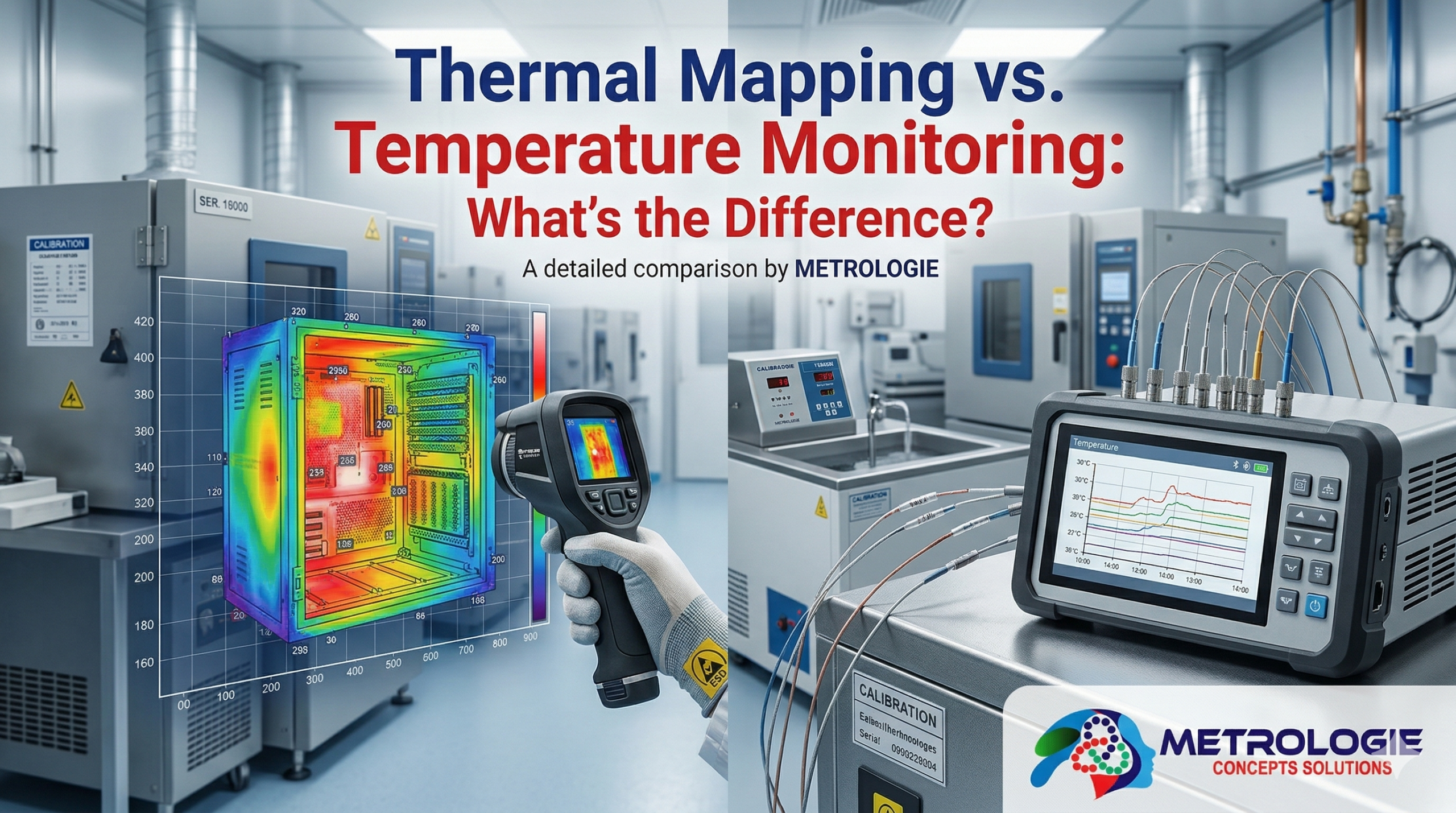
If you work in pharmaceuticals, food manufacturing, cold chain logistics, or any industry where temperature control is critical, you have almost certainly encountered the terms thermal mapping and temperature monitoring. They sound similar. They both involve temperature. They are both required for regulatory compliance. And they are both essential for protecting the integrity of your products.
But they are not the same thing — and confusing the two is one of the most costly mistakes a Philippine business can make when building its quality and compliance systems.
Thermal mapping and temperature monitoring are complementary processes that serve fundamentally different purposes. Using one without the other leaves serious gaps in your quality system. Using both — correctly, in the right sequence, with the right equipment — gives you a temperature-controlled storage environment that is validated, compliant, and genuinely protective of your products.
This authoritative guide explains exactly what thermal mapping and temperature monitoring are, how they differ, how they work together, what Philippine regulations require of each, and how to implement both effectively in your business. By the end, you will have a complete understanding of both concepts and the practical knowledge to apply them in your operations.
| Quick AnswerThermal mapping is a one-time (or periodic) validation study that proves your storage space maintains the correct temperature throughout. Temperature monitoring is the continuous, daily surveillance system that watches over your storage environment during normal operations.Think of it this way: thermal mapping qualifies the space; temperature monitoring guards it. |
What This Guide Covers
- The precise definitions of thermal mapping and temperature monitoring
- A side-by-side comparison of all key differences
- Why you cannot substitute one for the other
- How the two processes work together as a system
- Philippine regulatory requirements for each
- The role of calibration in both processes
- Industry-specific guidance for Philippine businesses
- Common mistakes and how to avoid them
- How to choose the right service provider in the Philippines
- Frequently asked questions
1. Defining Thermal Mapping: The Validation Study
Thermal mapping — also called temperature mapping, temperature distribution study, or thermal validation — is a documented scientific study that characterizes how temperature is distributed throughout a controlled storage environment. It is a proactive, episodic activity conducted at specific points in the lifecycle of a storage facility.
The core question that thermal mapping answers is: Does every part of this storage space consistently stay within the required temperature range?
The answer is never simply assumed. It is proven. Through calibrated sensors placed at dozens of carefully chosen locations throughout the space, thermal mapping produces a data-backed, three-dimensional picture of temperature behavior — across different heights, distances from walls and doors, proximity to cooling units, and varying load conditions.
What Thermal Mapping Reveals
A professional thermal mapping study identifies:
- Hot spots — areas where temperature consistently runs higher than the setpoint, often near doors, walls exposed to sunlight, or areas with poor air circulation
- Cold spots — areas where temperature drops below the minimum acceptable limit, often near cooling coils or fans
- Temperature gradients — the difference between the warmest and coolest measured locations
- Temporal variations — how temperature changes over time, including during door openings, defrost cycles, and peak ambient heat
- Seasonal behavior — how the space performs in the dry season versus the wet season (critically important in the Philippines)
- Power failure response — how quickly temperature rises when power is interrupted
When Thermal Mapping Is Performed
Thermal mapping is not a continuous activity. It is performed at defined moments in the lifecycle of a controlled storage area:
- Before first use — any controlled storage area must be mapped before temperature-sensitive products are introduced
- After modifications — changes to the HVAC system, cold room structure, insulation, or layout require a new mapping study
- Seasonally — in the Philippines, both dry season and wet season studies are recommended to capture peak stress conditions
- Periodically — most quality systems require requalification every one to three years depending on the criticality of the products stored
- After equipment failure — major equipment failure and repair may invalidate the previous mapping study
The Output of a Thermal Mapping Study
The primary deliverable of a thermal mapping study is a formal validation report. This document becomes part of your facility’s qualification documentation package and is presented to regulators, auditors, and clients as proof that your storage environment is fit for purpose. It contains the study protocol, calibration records for all equipment used, sensor placement maps, raw temperature data, statistical analysis, hot and cold spot identification, and conclusions with recommendations.
2. Defining Temperature Monitoring: The Ongoing Surveillance System
Temperature monitoring is the continuous, automated system that watches over your storage environment every minute of every day during normal operations. While thermal mapping is episodic and historical, temperature monitoring is real-time and ongoing.
The fundamental question that temperature monitoring answers is: Is the temperature in this storage space within the required range right now — and has it been within range throughout the day, week, and month?
Temperature monitoring uses a small number of permanently installed sensors — typically placed at the hot spots and cold spots identified during the previous thermal mapping study — connected to a data logging or monitoring system that records temperatures continuously, generates alerts when temperatures go out of range, and maintains an audit trail of temperature history.
What Temperature Monitoring Does
- Records temperature continuously at programmed intervals (typically every 5 to 30 minutes)
- Triggers alarms or alerts when temperature goes outside the defined acceptable range
- Provides a continuous, time-stamped record of storage conditions that can be reviewed by QA teams, auditors, and regulators
- Enables rapid response when temperature excursions occur — before products are compromised
- Generates the evidence base for release or quarantine decisions on temperature-sensitive products
- Supports regulatory reporting and audit readiness
The Architecture of a Temperature Monitoring System
A typical temperature monitoring system for a Philippine pharmaceutical or food business includes:
- Sensors or data loggers installed at permanent, fixed locations within the storage area
- A data collection system — either wired, wireless, or cloud-based — that aggregates readings from all sensors
- Software that displays current conditions, historical trends, and generates reports
- An alarm system that notifies designated personnel when temperatures go out of range
- Backup power provisions to ensure monitoring continues during power outages
Modern temperature monitoring systems used by leading Philippine businesses increasingly use cloud-based platforms that allow QA managers to view real-time temperatures from any device, receive alarm notifications via SMS or email, and access historical data for compliance audits from anywhere.
3. The Key Differences: Thermal Mapping vs. Temperature Monitoring
Now that we have defined both processes, here is a comprehensive side-by-side comparison that makes the differences crystal clear. This comparison covers every dimension that matters for a Philippine business building its quality and compliance system.
| Dimension | Thermal Mapping | Temperature Monitoring |
| Primary purpose | Validate that the storage space is fit for use | Continuously verify that the space remains in-spec during operations |
| Question it answers | “Is every part of this space within range?” | “Is the space in range right now and has it been in range today?” |
| Activity type | Episodic validation study | Ongoing, continuous surveillance |
| Frequency | Periodic: before use, after changes, seasonally | Continuous: 24 hours a day, 7 days a week, 365 days a year |
| Duration | 24 hours to 7+ days per study | Permanent — never stops while the facility is in operation |
| Number of sensors | Many (10 to 50+, distributed throughout the entire space) | Few (typically 2 to 6 at fixed, permanent strategic locations) |
| Sensor placement | Comprehensive grid covering corners, heights, risk zones | Targeted at hot spots and cold spots identified by mapping |
| Output | Validation report, qualification documentation | Temperature logs, alarm records, trend reports, excursion reports |
| Regulatory role | Qualification (IQ/OQ/PQ) — proves the space is suitable | Ongoing compliance evidence — proves the space is maintained |
| When required | Before first use; after changes; seasonally; periodically | Always — every day the facility stores temperature-sensitive products |
| Data use | One-time analysis for qualification decision | Ongoing decision-making: product release, quarantine, process improvement |
| Who performs it | Specialist metrology service provider (recommended) | Internal QA team with validated monitoring system |
| Calibration requirement | All sensors calibrated immediately before the study | Sensors calibrated regularly (typically annually or per SOP) |
| Regulatory standard | WHO TRS 961 Supp. 8; ISPE GPG; USP <1079.4> | WHO GDP; GMP regulations; FDA 21 CFR Part 11; ISO/IEC 17025 |
| Cost structure | One-time service fee per study | Ongoing: equipment, software, calibration, maintenance |
| Philippine FDA relevance | Required for LTO compliance and cold chain qualification | Required for daily GMP and GDP compliance |
| Key Takeaway for Philippine BusinessesThermal mapping tells you the space is safe to use. Temperature monitoring tells you it is staying safe. You need both — in that order. Mapping first, monitoring always after. |
4. Why You Cannot Use One to Replace the Other
A common misconception among Philippine businesses — particularly small and medium enterprises that are new to GMP or GDP compliance — is that having a temperature monitoring system is sufficient on its own, or conversely, that a thermal mapping study completed once covers all ongoing compliance obligations. Both assumptions are incorrect and can result in regulatory failures, product losses, and liability.
Why Temperature Monitoring Alone Is Not Enough
Temperature monitoring, however sophisticated, tells you the temperature at the specific location where your sensor is installed. It does not tell you the temperature everywhere in your storage space. Without a thermal mapping study, you do not know:
- Whether your sensor is placed at the most representative location in the room
- Whether there are hot spots or cold spots in other parts of the space that your sensor cannot detect
- Whether products stored in areas far from your sensor are actually being exposed to acceptable temperatures
- Whether your storage space can pass the qualification requirements set by the Philippine FDA, WHO, or your clients
Consider this scenario: a pharmaceutical company in Quezon City installs a single temperature monitor in the center of its cold room and observes temperatures consistently between 3°C and 6°C — well within the 2°C to 8°C requirement. The QA manager is satisfied. But without thermal mapping, the company does not know that the area near the cold room door — where products are sometimes staged for picking — reaches 11°C each time the door opens in the afternoon heat. Products staged in that area are being exposed to temperatures that could compromise their efficacy — and the monitoring system shows nothing wrong.
This is exactly the scenario that thermal mapping prevents. It finds the hot spot. The monitoring sensor gets repositioned. A warning zone is marked on the floor. And products are never stored near the door again.
Why Thermal Mapping Alone Is Not Enough
Conversely, a thermal mapping study conducted once — even a perfect, comprehensive study — does not provide ongoing compliance assurance. Thermal mapping is a snapshot of your storage environment at a point in time. It does not:
- Detect the temperature excursion that occurs tonight when the cooling unit malfunctions
- Alert your team to the fact that temperatures rose to 14°C for four hours during a power interruption last Tuesday
- Provide the documented evidence that regulators require to prove your products were stored in-spec throughout their storage period
- Catch the slow drift in your cooling system’s performance that develops over months
Without continuous monitoring, you have no real-time visibility into your storage environment and no evidence trail for regulatory compliance. A thermal mapping report from two years ago does not prove that temperatures were acceptable yesterday.
| The Regulatory Reality in the PhilippinesPhilippine FDA inspectors evaluating cold chain compliance will ask for both: the thermal mapping qualification documentation AND the ongoing temperature monitoring records. Presenting one without the other is insufficient for full compliance with FDA Circular No. 2021-003 and the WHO Good Distribution Practice guidelines referenced by the Philippine FDA.Businesses that invest in temperature monitoring without prior thermal mapping are building their compliance system on an unvalidated foundation. |
5. How Thermal Mapping and Temperature Monitoring Work Together
The correct way to think about thermal mapping and temperature monitoring is not as alternatives or competitors — but as sequential, complementary phases of a complete temperature assurance system. One enables the other, and both are necessary for a robust quality program.
Here is how the two processes form an integrated system:
Phase 1: Qualify the Space with Thermal Mapping
Before any temperature-sensitive products are stored, a thermal mapping study is conducted. This study characterizes the full temperature distribution of the space under relevant conditions. The study identifies hot spots and cold spots, documents the worst-case temperature zones, and confirms whether the space meets the required temperature range throughout its full volume.
If the study fails — meaning the space does not consistently maintain the required temperature range in all zones — corrective actions are taken (adjusting airflow, repositioning shelving, modifying the HVAC setpoint) and the study is repeated until the space qualifies.
Phase 2: Use Mapping Data to Design the Monitoring System
The thermal mapping report directly informs where the permanent temperature monitoring sensors should be placed. Industry standards and WHO guidelines agree: monitoring sensors must be located at the hot spot and the cold spot identified during mapping. These are the positions where out-of-tolerance conditions are most likely to occur — and therefore where continuous monitoring provides the most meaningful early warning.
This is a critical connection that many Philippine businesses miss. If you install your monitoring sensors before conducting a thermal mapping study, you are guessing at sensor placement. Your sensors may be in comfort zones that look perfectly controlled while the actual worst-case locations in your facility go unmonitored.
Phase 3: Monitor Continuously
With sensors correctly positioned based on mapping data, the temperature monitoring system operates continuously. It records temperatures, generates alarms for excursions, and creates the compliance evidence trail that auditors and regulators will review.
Phase 4: Repeat Mapping Periodically and After Changes
Temperature monitoring is not a substitute for periodic remapping. Over time, changes to the building envelope, HVAC system performance, loading patterns, or ambient conditions can alter the temperature distribution profile identified in the original mapping study. Periodic remapping — at minimum annually for high-risk products, or after any significant change — ensures that the monitoring system remains correctly configured for the current thermal behavior of the space.
| The Virtuous CycleMap the space → use mapping data to place monitoring sensors → monitor continuously → use monitoring data to detect anomalies → repeat mapping after changes or periodically → update monitoring configuration based on new mapping data.This cycle never ends. It is the foundation of a robust temperature assurance system that will satisfy Philippine FDA inspectors, WHO auditors, and your most demanding clients. |
6. Philippine Regulatory Requirements: What the Law and Guidelines Require
Understanding which Philippine regulations and international guidelines require thermal mapping and temperature monitoring — and what specifically they demand — is essential for any business operating in a regulated industry. Here is the definitive overview of the regulatory landscape as it applies to Philippine businesses in 2025.
FDA Philippines — Pharmaceutical Cold Chain
The Food and Drug Administration of the Philippines (FDA Philippines) regulates pharmaceutical products, biologics, vaccines, medical devices, and cosmetics. For pharmaceutical manufacturers, distributors, and cold chain operators, the key regulatory reference is FDA Circular No. 2021-003: Revised Guidelines on Cold Chain Management for Pharmaceutical Products and Establishments.
This circular requires establishments involved in cold chain handling to implement temperature management systems that include both the initial qualification of storage areas — which means thermal mapping — and the continuous monitoring of temperature conditions during operations. Establishments applying for or renewing a License to Operate (LTO) must demonstrate compliance with these requirements.
The Philippine FDA also references WHO Good Storage and Distribution Practice guidelines (Annex 7 and Annex 9 of the WHO Technical Report Series), which are internationally accepted standards for both thermal mapping and temperature monitoring of pharmaceutical storage facilities.
WHO Technical Guidelines
The World Health Organization’s guidance is the global reference standard for temperature management in pharmaceutical supply chains. For thermal mapping, the primary reference is WHO Technical Report Series No. 961, Annex 9, Supplement 8: Temperature Mapping of Storage Areas. This document provides detailed requirements for planning, conducting, and documenting thermal mapping studies — including minimum study durations, sensor placement principles, acceptance criteria, and documentation requirements.
For temperature monitoring, WHO Good Distribution Practice guidelines specify that all storage areas must be equipped with continuous temperature monitoring systems, that monitoring equipment must be calibrated, and that temperature records must be maintained and available for inspection.
ISPE Good Practice Guide
The International Society for Pharmaceutical Engineering (ISPE) Good Practice Guide: Controlled Temperature Chambers (Second Edition, 2021) is the technical industry standard for commissioning, qualification, mapping, and monitoring of temperature-controlled storage. While not a legally binding regulation in the Philippines, it is widely referenced by multinational pharmaceutical companies operating here and is the technical framework against which high-quality thermal mapping studies are evaluated.
HACCP — Food Industry
For food businesses in the Philippines, the Hazard Analysis and Critical Control Points (HACCP) system requires documented control of critical control points — and cold storage temperature is almost always a critical control point. Both thermal mapping (to validate the storage environment) and temperature monitoring (to demonstrate ongoing control) are necessary components of a fully implemented HACCP plan.
ISO/IEC 17025 and Calibration
ISO/IEC 17025 is the international standard for testing and calibration laboratory competence. It is the accreditation standard used by the Philippine Accreditation Bureau (PAB) to certify calibration laboratories in the Philippines. Both thermal mapping and temperature monitoring depend on calibrated measurement equipment — and calibration must be traceable to standards recognized by a PAB-accredited laboratory to meet regulatory requirements.
GMP — Good Manufacturing Practice
Good Manufacturing Practice guidelines — which apply to pharmaceutical manufacturers, food processors, cosmetic manufacturers, and other regulated industries in the Philippines — require validation of critical processes and systems, including temperature-controlled storage. Under GMP, thermal mapping is part of the qualification lifecycle (Installation Qualification, Operational Qualification, Performance Qualification), and continuous temperature monitoring is part of the ongoing process monitoring required to maintain validated state.
| Regulation/Guideline | Thermal Mapping Requirement | Temperature Monitoring Requirement |
| FDA Circular 2021-003 (PH) | Storage area qualification required before use | Continuous monitoring required during operations |
| WHO TRS 961 Supplement 8 | Detailed methodology for mapping studies | Monitoring sensors placed at hot/cold spots from mapping |
| WHO GDP Guidelines | Mapping required for warehouse qualification | Continuous records required; alarms; calibration |
| ISPE GPG CTC 2nd Ed. | Full commissioning and qualification mapping protocol | Independent monitoring system with calibrated sensors |
| HACCP (Food industry) | Temperature control validation at CCPs | Continuous monitoring and recording at CCPs |
| GMP (Pharma/Food) | IQ/OQ/PQ qualification of storage areas | Ongoing process monitoring; deviation management |
| ISO 9001 | Validation of measurement processes | Control of monitoring/measuring equipment |
7. The Critical Role of Calibration in Both Processes
One element that thermal mapping and temperature monitoring share — and that is non-negotiable for regulatory compliance in both — is calibration. Every sensor and data logger used in either process must be calibrated, and that calibration must be traceable to national or international measurement standards.
Why Calibration Matters
Calibration is the process of comparing a measurement instrument against a reference standard of known accuracy and documenting any deviation. A data logger that reads 5°C but actually measures 7°C will give your organization completely false confidence in the temperature conditions of your storage area. Your thermal mapping report will say the space passes — when it actually does not. Your monitoring system will show no excursions — when products may actually be exposed to unacceptable temperatures.
Uncalibrated or improperly calibrated temperature measurement equipment is one of the most common sources of pharmaceutical and food safety failures. It is also one of the most common reasons Philippine businesses fail regulatory inspections.
Calibration Requirements for Thermal Mapping
For a thermal mapping study, all data loggers must be calibrated immediately before deployment. The calibration must cover the full temperature range expected during the study and must be performed by a laboratory with documented traceability to national or international standards. In the Philippines, this means using a calibration laboratory accredited by the Philippine Accreditation Bureau (PAB) to ISO/IEC 17025.
After the mapping study is complete, the data loggers should ideally be calibrated again (post-study calibration) to confirm that their accuracy did not drift during the study period. The calibration certificates — pre-study and post-study — become part of the thermal mapping report and are the evidence that the measurement data can be trusted.
Calibration Requirements for Temperature Monitoring
For a continuous temperature monitoring system, sensors and data loggers must be calibrated regularly — typically annually, or at the frequency defined in your quality system’s SOP. Calibration records must be maintained and available for inspection. Monitoring sensors that fall outside their calibration specification must be replaced or recalibrated before the monitoring data they generate can be used for compliance purposes.
The calibration of monitoring equipment is not a one-time event. It is an ongoing maintenance obligation that must be scheduled, tracked, and documented as part of your quality management system.
Traceability in the Philippine Context
In the Philippines, metrological traceability runs from the individual instrument through calibration laboratories accredited by the Philippine Accreditation Bureau (PAB), through the national metrology infrastructure of the Philippines, and ultimately to the International Bureau of Weights and Measures (BIPM) in France — the global authority for the International System of Units (SI). When your thermal mapping service provider or temperature monitoring equipment supplier can demonstrate this unbroken chain of traceability, you have the highest level of assurance that your temperature measurements are accurate, recognized, and defensible.
| Metrologie Solutions CommitmentAt Metrologie Solutions Philippines, all data loggers and sensors used in our thermal mapping studies are calibrated using equipment with full traceability to PAB-accredited standards. Our calibration certificates meet the documentation requirements of WHO, FDA Philippines, ISPE, and ISO/IEC 17025. When you work with us, you can present your thermal mapping documentation to any auditor or regulator with full confidence. |
8. Industry-Specific Guidance for Philippine Businesses
The relative importance of thermal mapping and temperature monitoring — and the specific regulatory standards that apply — varies by industry. Here is practical guidance for the major sectors in the Philippines where temperature control is critical.
Pharmaceutical Companies and Drug Distributors
This is the most heavily regulated sector for both thermal mapping and temperature monitoring in the Philippines. Drug manufacturers, importers, wholesale distributors, and licensed drug outlets are all subject to FDA Philippines regulations that require both processes.
For pharmaceutical cold storage (typically 2°C to 8°C), the sequence is clear: conduct a comprehensive thermal mapping study as part of cold room commissioning, use the results to position permanent monitoring sensors at identified hot and cold spots, install a validated continuous monitoring system with alarms, and repeat the mapping study seasonally and after any significant change. All equipment — both mapping data loggers and permanent monitoring sensors — must be calibrated with PAB-traceable certificates.
Hospital pharmacies and retail drug outlets storing refrigerated products are also expected to demonstrate temperature control. For smaller facilities, a mapping study of individual refrigerators — not just large cold rooms — may be required or strongly recommended.
Vaccine Cold Chain Operators
Vaccine storage in the Philippines is governed by DOH cold chain guidelines that align with WHO recommendations. Every link in the vaccine cold chain — from national cold stores to provincial warehouses to rural health units — must maintain vaccine products within 2°C to 8°C (or colder for some vaccines). Thermal mapping of storage areas at each level is essential, and continuous temperature monitoring with alarms and backup power is required for all vaccine storage facilities.
The consequences of inadequate temperature control for vaccines are severe: degraded vaccine potency, failed immunization programs, wasted vaccines, and — in the worst cases — vaccinations that do not protect against disease. Both thermal mapping and temperature monitoring are investments in public health outcomes as much as regulatory compliance.
Food Manufacturing and Distribution
The Philippine food industry — from meat processors and seafood exporters to dairy producers and cold chain logistics operators — faces increasing regulatory pressure for documented temperature control. HACCP certification, FDA food licensing, and export certification to international markets all require documented validation of cold storage environments.
For food businesses, thermal mapping is particularly important given the tropical Philippine climate, which creates large temperature differentials between outside ambient conditions and storage environments, and drives significant seasonal variation in thermal behavior inside cold rooms. Seasonal mapping — in both the dry season (when temperatures peak) and the wet season (when humidity peaks) — is essential.
Third-Party Logistics and Cold Chain Providers
Cold chain logistics is growing rapidly in the Philippines, driven by pharmaceutical distribution requirements, food export standards, and the growth of temperature-sensitive e-commerce. 3PL providers operating temperature-controlled warehouses and refrigerated transport are increasingly required by clients and regulators to demonstrate both thermal mapping qualification and continuous temperature monitoring.
For transport thermal mapping — characterizing temperature distribution inside refrigerated trucks and containers — the study methodology differs from stationary storage mapping but the principles are identical: calibrated sensors at multiple locations, data collection over a representative period, analysis of hot and cold spots, and a formal report.
Healthcare Facilities
Hospitals, medical laboratories, blood banks, and healthcare facilities storing temperature-sensitive medical products — including blood products, reagents, biologics, and diagnostic materials — face regulatory requirements for both thermal mapping and continuous monitoring of storage equipment. Healthcare facilities often underestimate their thermal mapping obligations, focusing on temperature monitoring records while neglecting the underlying mapping qualification of their storage equipment.
9. Common Mistakes Philippine Businesses Make — And How to Avoid Them
After years of providing thermal mapping and calibration services across the Philippines, our team at Metrologie Solutions has seen the same mistakes repeated across industries. Here are the most common — and how to avoid them.
Mistake 1: Installing Monitoring Sensors Without Prior Mapping
This is the single most common and consequential mistake. Businesses install a temperature monitoring system in a new cold room and assume they are compliant. But without thermal mapping, sensor placement is guesswork. The monitoring system may be watching a comfortable zone of the room while products in unmonitored hot or cold spots are being damaged.
The fix: Always conduct thermal mapping before placing permanent monitoring sensors. Use the hot and cold spots identified in the mapping report to determine sensor locations.
Mistake 2: Treating Thermal Mapping as a One-Time Event
Many Philippine businesses conduct a mapping study at facility commissioning and never repeat it. Over time, the HVAC system ages, loading patterns change, building modifications are made, and the thermal profile of the space shifts. The original mapping data becomes outdated — but the business continues to rely on it.
The fix: Schedule periodic remapping — at minimum every two years for most applications, or more frequently for high-risk products. Always remap after significant changes.
Mistake 3: Single-Season Mapping Only
Conducting thermal mapping only in one season is insufficient in the Philippines. A space that qualifies easily in January (cool dry season) may fail in April (peak summer) when ambient temperatures reach 38°C or above. Regulators and auditors increasingly expect seasonal mapping for Philippine facilities.
The fix: Conduct mapping studies in both the hot dry season (March to May) and the wet season (July to September). This ensures your qualification covers worst-case ambient conditions.
Mistake 4: Using Uncalibrated or Expired Calibration Equipment
Both mapping studies and monitoring systems require equipment with valid, current calibration certificates. Using data loggers whose calibration certificates have expired — or whose calibration cannot be traced to PAB-accredited standards — produces data that regulators may reject entirely.
The fix: Maintain a calibration schedule for all monitoring equipment. Ensure all mapping data loggers have fresh, pre-study calibration certificates from a PAB-accredited laboratory before any study begins.
Mistake 5: No Formal Protocol for the Mapping Study
Conducting a thermal mapping study without a formal written protocol means there is no documented basis for the study design, no predefined acceptance criteria, and no way to demonstrate to auditors that the study was conducted in a controlled, repeatable manner.
The fix: Always develop and approve a written protocol before beginning any thermal mapping study. The protocol should specify the study scope, sensor placement rationale, study duration, acceptance criteria, and responsibilities.
Mistake 6: Inadequate Response to Temperature Excursions
Temperature monitoring is only valuable if excursions are acted upon. Many Philippine businesses have monitoring systems that generate alarms — but lack clear SOPs for what to do when an alarm occurs. Products are left in an out-of-range environment for hours while someone figures out the protocol.
The fix: Develop and train on a clear Temperature Excursion Response SOP. Define alarm thresholds, responsible personnel, escalation paths, and product disposition criteria. Test the SOP periodically through mock excursion drills.
10. How to Choose the Right Service Provider in the Philippines
Whether you need a thermal mapping study, a temperature monitoring system, or both, choosing the right service provider is critical. Not all providers in the Philippines offer the same level of technical competence, regulatory expertise, or documentation quality.
For Thermal Mapping Services: What to Look For
- PAB-accredited calibration: Ensure data loggers are calibrated by a PAB-accredited laboratory to ISO/IEC 17025. Ask to see calibration certificates before engaging any provider.
- Regulatory expertise: Your provider should understand Philippine FDA requirements, WHO TRS 961 guidelines, and ISPE standards — and should be able to discuss how their study methodology aligns with each.
- Written protocol: Any reputable provider will develop a formal written protocol before beginning a study. A provider who starts placing sensors without a protocol is not following best practice.
- Comprehensive reporting: Ask to see a sample report. It should contain all required elements: calibration certificates, sensor placement maps, raw data, statistical analysis, hot and cold spot identification, and conclusions.
- Philippine experience: Look for a provider with specific experience in the Philippine climate, regulatory environment, and industry sectors relevant to your business.
For Temperature Monitoring Systems: What to Look For
- Validated software: For pharmaceutical applications, the monitoring software must comply with data integrity requirements (FDA 21 CFR Part 11 or equivalent). Ask for validation documentation.
- Calibrated sensors: All sensors should come with calibration certificates, and the provider should offer ongoing calibration services or have a clear calibration reminder process.
- Alarm capability: The system must be capable of generating alarms when temperatures go out of range, with notifications to designated personnel via SMS, email, or other channels.
- Data security and backup: Temperature records are compliance evidence. The system must store data securely, prevent unauthorized alteration, and provide backup in case of system failure.
- Technical support: Temperature monitoring systems operate continuously. Ensure your provider offers responsive technical support for hardware failures and software issues.
| Why Metrologie Solutions Philippines Is the Right PartnerMetrologie Solutions Philippines offers both professional thermal mapping services and temperature monitoring system integration, with calibrated equipment traceable to PAB-accredited standards. Our team has deep expertise in Philippine FDA, WHO, HACCP, and ISPE requirements — and a proven track record across pharmaceutical, food, logistics, and healthcare clients throughout the Philippines.We understand the Philippine climate, the local regulatory landscape, and the practical challenges of temperature control in a tropical archipelago. Contact us today to discuss your thermal mapping and monitoring requirements. |
11. Frequently Asked Questions
Can I use the data from my temperature monitoring system to replace a thermal mapping study?
No. Temperature monitoring data shows what is happening at your sensor locations. It does not characterize temperature distribution throughout the entire storage space. Only a thermal mapping study with sensors at multiple positions can do that. Regulators and auditors will not accept monitoring records as a substitute for a mapping qualification report.
How many sensors do I need for a thermal mapping study versus ongoing monitoring?
The number of sensors for a thermal mapping study is much larger. WHO guidelines recommend a minimum number of sensors per unit volume, with additional sensors at positions of known risk (near doors, cooling coils, walls). For a typical 20 cubic meter cold room, you might deploy 15 to 25 sensors for mapping. For ongoing monitoring, the same room might only need two permanent sensors — one at the hot spot and one at the cold spot identified by mapping.
How long does a thermal mapping study take compared to setting up temperature monitoring?
A thermal mapping study for a standard cold room typically requires one to two weeks from protocol development through final report delivery — including the 24 to 72 hour data collection period and the report writing phase. Setting up a temperature monitoring system may take a few days for hardware installation and software configuration. Both processes are investments in compliance — and the mapping should always come first.
If I already have temperature monitoring in place, do I still need to do thermal mapping?
Yes, absolutely — and this situation is more common than you might think. Many Philippine businesses installed monitoring systems before understanding the importance of mapping. The correct approach is to conduct a thermal mapping study now, use the results to verify whether your existing sensors are correctly positioned (they may not be), and reposition them if necessary based on the mapping data. Your facility is then properly qualified, and your monitoring system is correctly configured.
What is the difference between thermal mapping and temperature validation?
These terms are often used interchangeably. Thermal mapping is the study process; temperature validation is the broader validation activity of which mapping is the core component. In the GMP qualification framework, thermal mapping is the primary activity in Operational Qualification (OQ) and Performance Qualification (PQ) of temperature-controlled storage.
Does a refrigerator need thermal mapping, or just temperature monitoring?
Both, if the refrigerator is used to store regulated temperature-sensitive products (pharmaceuticals, vaccines, blood products, reagents). For pharmaceutical refrigerators, thermal mapping is expected as part of equipment qualification before use. For smaller units like pharmacy refrigerators or clinical blood storage units, a mapping study characterizes the temperature distribution so that the monitoring sensor can be correctly placed and the safe storage zones identified.
How often should I calibrate my temperature monitoring sensors?
Most quality systems require annual calibration of temperature monitoring sensors, but the appropriate frequency depends on the criticality of your products and the requirements of your regulatory framework. High-risk applications (vaccines, insulin, biologics) typically warrant more frequent calibration — some organizations calibrate every six months. Always follow your validated SOP and regulatory guidance. After any calibration, update your calibration records and confirm that the sensor’s readings are within specification before relying on its data.
Conclusion: Two Different Tools, One Complete Temperature Assurance System
Thermal mapping and temperature monitoring are not rivals. They are partners — each performing a role that the other cannot, each making the other more effective, and together forming the complete temperature assurance system that Philippine businesses need to protect their products, comply with regulations, and earn the trust of their clients and regulators.
Thermal mapping validates. It proves that your space is suitable. It identifies the risk zones that your monitoring system must watch. It gives you the scientific, documented foundation for every temperature-related compliance claim you make.
Temperature monitoring protects. It watches your storage environment continuously. It catches problems before they become disasters. It generates the evidence trail that proves your products were stored correctly throughout their time in your facility.
For Philippine businesses operating in pharmaceuticals, food, logistics, healthcare, or any other temperature-sensitive industry: the question is not which one you need. The answer to that is both. The question is whether you are implementing them correctly — in the right sequence, with properly calibrated equipment, following the right regulatory standards, and with documentation that will stand up to the most rigorous audit.
Metrologie Solutions Philippines is here to help you get both right. We provide professional thermal mapping services, calibration support, and technical guidance on temperature monitoring system design — all tailored to the Philippine regulatory environment and the realities of operating in a tropical climate.
| Ready to Build a Complete Temperature Assurance System?Contact Metrologie Solutions Philippines today. Our team will assess your current setup, recommend the right sequence of thermal mapping and monitoring activities, and provide the documentation your business needs to pass any regulatory inspection with confidence.Visit: metrologiesolutions.com | Services: Thermal Mapping, Calibration, Training, Monitoring System Consultation |
| About Metrologie Solutions PhilippinesMetrologie Solutions Philippines is the country’s leading authority on thermal mapping, instrument calibration, and metrology training. We serve pharmaceutical companies, food manufacturers, cold chain logistics providers, and healthcare facilities across the Philippines with services that meet the highest international standards.Website: metrologiesolutions.com | Services: Thermal Mapping · Calibration · Training · Monitoring Consultation |