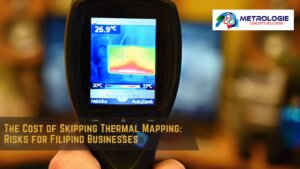

The Philippines stands on the front lines of the global climate crisis. As a tropical archipelago, its logistical backbone—the cold chain—is already under constant stress from high ambient temperatures and volcanic humidity. However, as the impacts of climate change accelerate, the traditional “set-it-and-forget-it” approach to warehouse temperature management is no longer viable.
For industries regulated by the Food and Drug Administration (FDA) Philippines, such as pharmaceuticals and biotechnology, the stakes are rising alongside the thermometer. Thermal mapping—the process of documenting the temperature distribution within a storage space—is shifting from a periodic compliance task to a critical, high-frequency tool for survival. When the “hottest day of the year” ten years ago becomes the “average afternoon” of today, your thermal validation must evolve.
The Shifting Baseline: PAGASA’s Warming Projections
To understand why thermal mapping needs are changing, we must first look at the data provided by the Philippine Atmospheric, Geophysical and Astronomical Services Administration (PAGASA). Their recent assessments indicate that the annual mean temperature in the Philippines has risen by approximately $0.68^\circ\text{C}$ over the last 65 years.
The Escalation to 2050
Projections suggest that by mid-century (2036–2065), the country’s average mean temperature could increase by as much as $0.9^\circ\text{C}$ to $1.9^\circ\text{C}$ under moderate emission scenarios. In high-emission scenarios, this could spike even further.
- Impact on HVAC Sizing: Most warehouse HVAC (Heating, Ventilation, and Air Conditioning) systems in the Philippines were designed based on historical peak temperatures. As these peaks become the new normal, systems that once passed thermal mapping with ease are now struggling to maintain the required $2^\circ\text{C}$ to $8^\circ\text{C}$ or $15^\circ\text{C}$ to $25^\circ\text{C}$ ranges.
- Thermal Mapping Implication: Facilities must now perform mapping during the “Extreme Summer” months (typically April and May) to ensure their equipment can handle the new, higher ambient baseline.
The El Niño / La Niña “Whiplash” and Cold Chain Stability
The Philippines is heavily influenced by the El Niño-Southern Oscillation (ENSO). While climate change doesn’t necessarily create ENSO, it is proven to intensify its effects, creating a “whiplash” effect that wreaks havoc on storage stability.
The El Niño Heat Surge
During El Niño years, the Philippines experiences prolonged dry spells and record-breaking heat. For a warehouse in an industrial park in Laguna or Cavite, this means the external building envelope (the roof and walls) is subjected to intense solar radiation for longer periods.
- Thermal Stratification: Mapping during an El Niño event often reveals significant temperature stratification—where the air near the ceiling becomes dangerously hot, even if the floor-level sensors show “Pass” results.
- The Need for “Worst-Case” Mapping: Climate change makes it essential for companies to perform a “Stress Test” mapping during an El Niño cycle to identify the exact point where the insulation or the HVAC capacity fails.
The La Niña Humidity Challenge
Conversely, La Niña brings excessive rainfall and extreme humidity. High humidity doesn’t just feel uncomfortable; it physically changes how cooling systems function. Latent heat—the energy required to remove moisture from the air—increases the load on evaporator coils.
- Humidity Ingress: Climate-driven storms are becoming more intense. If a warehouse’s loading docks are open during a high-humidity tropical storm, the “Recovery Time” (the time it takes to return to the setpoint) can double. Thermal mapping must now include Humidity Mapping to ensure that moisture-sensitive products are not compromised by condensation.
The Science of Thermal Holdover in a Warming Climate
In the Philippines, power stability is a frequent concern, especially during the storm season. When the power goes out, the “Holdover Time”—the duration a facility can stay within the safety range without active cooling—is the only thing protecting millions of pesos worth of inventory.
Climate change reduces this safety margin. As the external environment gets hotter, the rate of heat transfer through the warehouse walls ($\dot{Q}$) increases. The basic heat transfer equation shows this relationship:
$$\dot{Q} = U \cdot A \cdot \Delta T$$
Where:
- $U$ is the overall heat transfer coefficient (insulation quality).
- $A$ is the surface area of the warehouse.
- $\Delta T$ is the temperature difference between the outside and the inside.
As climate change increases the outside temperature, the $\Delta T$ grows larger, causing heat to “leak” into the building faster. Consequently, a warehouse that had a 4-hour holdover time in 2015 might only have a 2.5-hour holdover time in 2026. Frequent thermal mapping is required to re-verify these holdover times so that emergency response plans (e.g., generator activation) remain accurate.
Regulatory Evolution: FDA Philippines and AO 2024-0015
The regulatory landscape in the Philippines is adapting to these environmental pressures. The FDA Philippines Administrative Order No. 2024-0015 (which recently updated the rules for Licensing to Operate) emphasizes the need for robust quality systems.
The Shift from Static to Dynamic Compliance
In the past, many companies performed a thermal map once and assumed it was valid for three to five years. However, with the rapid shifting of climate patterns, auditors are increasingly looking for periodic re-validation.
- Risk-Based Approach: Regulatory bodies are moving toward a risk-based model. If your facility is located in a “Hot Zone” (like Northern Luzon or Central Mindanao) or an area prone to flooding and power outages, the FDA expects more frequent thermal data to prove you are actively managing the increased climatic risk.
- MKT (Mean Kinetic Temperature) Reporting: Beyond simple Min/Max values, companies are now utilizing MKT to account for the cumulative effect of temperature spikes caused by the warming climate.
Summary of Climate-Driven Mapping Changes
| Factor | Historical Mapping | Modern Climate-Adjusted Mapping |
| Frequency | Once every 3-5 years. | Annual or biennial (Risk-based). |
| Seasonality | Any time of year. | Mandatory “Extreme Summer” (MAM) mapping. |
| Scope | Temperature only. | Combined Temperature and Relative Humidity. |
| Stress Testing | Basic door-open tests. | Extended power-failure and high-ambient tests. |
| Data Focus | Simple Pass/Fail. | MKT and Heat Transfer Rate analysis. |
Conclusion of Part 1
Climate change is not a future threat for the Philippine logistics sector; it is a present-day operational reality. The “baseline” has moved, and with it, the margin for error has shrunk. Thermal mapping is no longer a luxury of the elite pharmaceutical giants—it is an essential diagnostic for anyone handling temperature-sensitive goods in a warming archipelago.
By acknowledging the data from PAGASA and the shifting regulatory expectations of the FDA, businesses can move from reactive firefighting to proactive climate resilience.