
In the relentless heat of the Philippine archipelago, maintaining a stable temperature isn’t just a matter of comfort—it’s a matter of survival for products, data, and business licenses. While many believe that a single wall-mounted thermometer is enough to monitor a room, the reality of physics in a tropical climate proves otherwise.
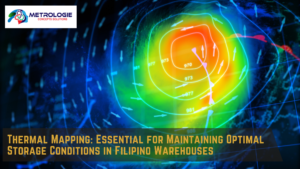
Thermal Mapping (also known as temperature and humidity mapping) is the scientific process of documenting the environmental profile of a three-dimensional space. In the Philippines, where high humidity and ambient temperatures often exceed 33°C, this service has become indispensable for a wide range of industries.
If your business falls into any of the following categories, thermal mapping is no longer a luxury; it is a critical operational requirement.
1. Pharmaceutical and Life Sciences
The pharmaceutical sector is perhaps the most heavily regulated industry regarding temperature control. In the Philippines, the Food and Drug Administration (FDA) and Good Distribution Practices (GDP) mandate strict adherence to storage conditions.
- Retail Pharmacies and Boticas: Per FDA Circular No. 2014-025, any outlet carrying vaccines and biologics must prove a functioning cold chain.
- Vaccine Cold Rooms: Vaccines are “thermolabile.” Mapping identifies “Hot Spots” near doors or “Cold Spots” directly under cooling vents that could freeze and destroy expensive stock.
- Laboratory Stability Chambers: Research labs require precise mapping to ensure that the results of their shelf-life studies are scientifically valid.
2. Food and Beverage (F&B) Industry
With the Philippines being a major exporter of high-value agricultural products like mangoes, bananas, and seafood, the F&B industry relies on thermal mapping to meet international safety standards (HACCP/ISO).
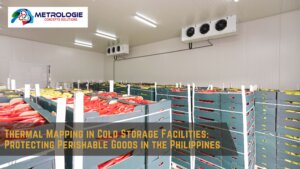
- Cold Storage Warehouses: Large-scale freezers for poultry and meat must be mapped to ensure air circulation is uniform, preventing “thaw-refreeze” cycles that lead to bacterial growth.
- Blast Freezers: Mapping ensures that products reach the required core temperature within the necessary timeframe to lock in freshness.
- Supermarket Distribution Centers: These facilities handle high volumes of “Fast-Moving Consumer Goods” (FMCG). Mapping helps optimize loading dock operations, where heat ingress is highest.
3. Data Centers and Telecommunications
The Philippines is rapidly becoming a regional hub for hyperscale data centers. Servers generate immense amounts of heat, and in a tropical environment, the cooling systems must be surgically precise.
- Server Rooms: Thermal mapping identifies “recirculation” zones where hot air from the back of servers is being sucked back into the front intake, leading to hardware failure.
- Power Rooms (UPS): Lead-acid and lithium batteries are highly sensitive to heat. Mapping ensures these rooms stay within the 20°C to 25°C range to prevent battery degradation and fires.
4. Logistics and Third-Party Providers (3PL)
“The Last Mile” in the Philippines—spanning island-to-island transport via roll-on/roll-off (RO-RO) ships and trucks—is a logistical nightmare for temperature control.
- Reefer Trucks (Refrigerated Vans): Mapping the inside of a delivery van is essential to understand how the temperature fluctuates during multi-drop deliveries when the door is opened frequently under the hot sun.
- Insulated Shipping Containers: Companies using passive cooling (gel packs/dry ice) need mapping to validate how long their insulation will hold up during a typical 24-hour Philippine transit delay.
5. Manufacturing and Industrial Plants
Many industrial processes in the Philippines require controlled environments to prevent material degradation.
- Semiconductor Cleanrooms: Electronics manufacturing requires stable humidity (often below 40% RH) to prevent oxidation. Thermal mapping (including humidity) validates these cleanrooms.
- Paint and Chemical Storage: Certain resins and volatile chemicals become unstable or lose their bonding properties if stored in high-heat areas near warehouse roofs.
Summary: The Risks of Skipping Thermal Mapping
| Industry | The Risk of No Mapping | The Reward of Mapping |
| Pharma | FDA License suspension; ineffective vaccines. | 100% Audit compliance; patient safety. |
| Food | Mass spoilage; export rejections; food poisoning. | Extended shelf life; brand trust. |
| Data Centers | Server “thermal shutdown”; high energy bills. | Optimized cooling; 99.99% uptime. |
| Logistics | Insurance claim denials for damaged cargo. | Verified cold chain; competitive advantage. |
When Should You Conduct Thermal Mapping?
Under WHO Technical Report Series No. 961, thermal mapping should be performed at specific milestones:
- Initially: When a new facility or equipment is commissioned.
- Seasonally: In the Philippines, this means once during the Hot Dry Season (March-May) and once during the Rainy Season (July-October) to account for external heat and humidity extremes.
- Post-Modification: If you change your racking layout, repair your HVAC, or add more stock to the room.
Conclusion: Data is Your Best Coolant
In the high-stakes environment of 2026, Philippine businesses cannot afford to “guess” their internal temperatures. Thermal mapping provides the empirical data required to protect assets, satisfy regulators, and reduce energy costs.
If you are responsible for the integrity of temperature-sensitive goods in the Philippines, professional thermal mapping is the most critical audit-ready documentation you can own.
Would you like me to help you find a DOLE or FDA-compliant thermal mapping protocol template for your specific warehouse size?