
Introduction: The Invisible Threat to Product Integrity
In the vast, interconnected world of modern manufacturing, logistics, and healthcare, the concept of the “cold chain” is paramount. This refers to the unbroken series of storage and distribution activities that maintain a given temperature range for a product from the point of origin to the point of consumption. When the product being protected is a life-saving vaccine, a complex biologic drug, or a high-value chemical reagent, the consequences of temperature deviation—a process known as a thermal excursion—are catastrophic. The integrity, efficacy, potency, and safety of these Time- and Temperature-Sensitive Products (TTSPPs) can be irreversibly compromised, leading to massive financial losses and, more critically, profound risks to patient health and public safety.
This existential risk is the core reason why regulatory bodies across the globe—from the U.S. Food and Drug Administration (FDA) to the European Medicines Agency (EMA) and the World Health Organization (WHO)—do not merely suggest but mandate the process known as Thermal Mapping (or Temperature Mapping, often used interchangeably with Temperature Qualification). Thermal mapping is far more than a simple temperature check; it is a systematic, documented, and scientific validation procedure. It serves as the unimpeachable proof that a critical storage environment, whether a sprawling pharmaceutical warehouse, a small vaccine cold room, a deep-freeze unit, or a transit vehicle, is capable of maintaining the required thermal conditions consistently, regardless of external stresses or internal operations. This comprehensive deep dive explores the regulatory philosophy, the technical requirements, and the profound safety implications that underpin the universal requirement for thermal mapping in all critical storage environments.
The Regulatory Imperative: Protecting the Public Good
The requirement for thermal mapping is fundamentally rooted in Good Manufacturing Practices (GMP), Good Distribution Practices (GDP), and Good Storage Practices (GSP). These standards, established and enforced by global health authorities, are the bedrock of pharmaceutical and medical device quality assurance.
The “GxP” Foundation: Quality by Design
Regulators operate under the principle of Quality by Design (QbD), meaning quality cannot be tested into a product; it must be built into the process. Since stability testing defines the safe storage range for a product, the storage environment must be qualified to prove it can maintain that range.
- FDA 21 CFR Part 211: The FDA, through its Current Good Manufacturing Practice (cGMP) regulations, explicitly requires that drug products be stored under “appropriate conditions of temperature, humidity, and light so that the identity, strength, quality, and purity of the drug products are not affected.” Thermal mapping is the documented evidence that proves these “appropriate conditions” are consistently met throughout the entire storage area, not just near a single thermostat.
- WHO Technical Report Series (TRS) No. 961, Annex 9, Supplement 8: The WHO provides detailed, globally recognized guidance, stating unequivocally that all new temperature-controlled storage areas must be temperature-mapped as part of a fully documented verification process before the installation is commissioned. This requirement is adopted by national regulatory bodies worldwide, especially those managing vaccine cold chains.
- EU GDP (EudraLex Volume 4): The European Union’s guidelines specify that the storage environment must be properly qualified. The mapping exercise is the primary means of qualification, identifying the temperature profile across the space under representative conditions.
The regulatory philosophy shifts the burden of proof onto the facility owner to demonstrate, through scientific evidence (the thermal map), that the storage area is fit for its intended purpose. Without this validation, a facility cannot legally be deemed safe for storing life-saving or temperature-sensitive products.
The Historical Context: Learning from Failure
Regulatory scrutiny intensified following numerous high-profile incidents where failures in the cold chain led to massive product recalls, loss of efficacy, and public health concerns. The discovery that seemingly minor temperature fluctuations could degrade complex proteins in biologics or alter the chemical stability of synthetic drugs provided the hard science needed to drive strict enforcement. Thermal mapping became the industry-standard preventative measure—a critical line of defense against unknown thermal variability that could undermine years of research and development. It is the formal acknowledgment that a building’s structure, a room’s height, proximity to external walls, and the cycling of HVAC units inherently create temperature variation, and this variation must be understood, managed, and documented.
The Technical Rationale: Understanding Spatial and Temporal Variations
The fundamental “Why” of thermal mapping lies in the inherent non-uniformity of temperature in any physical space, driven by thermodynamics and engineering dynamics.
1. Identifying Hot and Cold Spots (Spatial Variation)
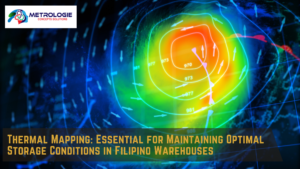
The most immediate goal of thermal mapping is to precisely locate the Hot Spot (the highest recorded temperature) and the Cold Spot (the lowest recorded temperature) within a storage space. These extreme points are critical for two reasons:
- Defining Usable Space: The mapped temperature extremes define the absolute range of conditions experienced by the product. If the hot spot exceeds the maximum allowable storage temperature (e.g., above 8∘C for a cold room), that specific physical location is deemed unusable for storage and must be clearly demarcated. The same applies to the cold spot falling below the minimum (e.g., below 2∘C).
- Permanent Sensor Placement: The final, continuous monitoring sensor (or probe) for the facility’s routine Quality Assurance (QA) system is often recommended to be placed at or near the Hot Spot. Logically, if the temperature at the hottest point remains within specification, all other points should also be safe. The Cold Spot may also be monitored to ensure freezing does not occur.
2. Analyzing Temperature Stratification
In large warehouses or high-bay storage facilities, temperature naturally stratifies vertically. Hot air rises and cold air sinks, creating significant temperature differences between the floor level and the ceiling level.
- Impact: A product stored near the roof of a warehouse in direct sunlight might be exposed to temperatures far exceeding the thermostat reading taken near the floor.
- Mapping Solution: Thermal mapping necessitates the placement of sensors in a three-dimensional grid—low, medium, and high levels—to capture this stratification, often revealing that the upper racking levels or mezzanine areas are unsuitable for storage.
3. Assessing Equipment Performance and Airflow
The HVAC or refrigeration unit is a major source of thermal non-uniformity.
- Air Throw: The discharge point of the cooling unit often creates a localized micro-climate with temperature extremes (e.g., an extremely cold jet of air). Products stored directly in the path of this air throw risk freezing or over-cooling.
- Air Return: Areas near the air return ducts may experience different temperatures and air movement patterns.
- Mapping Solution: Sensors are strategically placed near HVAC units, condensers, and ductwork to qualify the impact of the equipment cycling on the storage area’s thermal profile. This data is essential for the Operational Qualification (OQ) phase of validation.
4. Determining Temperature Uniformity (Homogeneity) and Stability
Thermal mapping provides metrics to describe the overall quality of the temperature control:
- Homogeneity: The measure of how evenly the temperature is distributed across the space at any given time. A highly homogeneous space has minimal temperature variation between sensors.
- Stability: The measure of how consistently the temperature remains within the set range over time, reflecting the control system’s ability to cope with normal operational cycles (door openings, HVAC cycling).
The Methodology of Compliance: The Mapping Protocol
Regulatory bodies require thermal mapping to be executed according to a documented, pre-approved protocol that follows the principles of validation. This is where the science of the study is formalized.
1. Defining the Acceptance Criteria
Before the study begins, the Acceptance Criteria must be clearly defined. This is the pass/fail benchmark for the entire study. For a typical 2∘C to 8∘C cold room, the acceptance criteria might be: “All data logger readings must remain within the range of 2.0∘C to 8.0∘C for the entire study duration, and the calculated Mean Kinetic Temperature (MKT) for all points must remain below the product’s defined MKT threshold.”
2. Sensor Placement and Quantity
Regulators require a sufficient number of calibrated sensors to accurately represent the 3D space.
- Grid Placement: Sensors are placed in a systematic grid pattern (length, width, height) to ensure comprehensive coverage. WHO guidelines, for instance, recommend sensor placement every 5–10 meters in a warehouse, with sensors at high, medium, and low levels at each grid point.
- Risk-Based Placement: Additional sensors are placed at known risk zones:
- Near exterior walls, windows, and the roof (solar load).
- Near internal and external doors (air exchange).
- Near cooling coils or heating elements.
- Near the facility’s internal thermostat/control sensor.
- Calibration: The sensors used (data loggers) must have a current, traceable calibration certificate (e.g., NIST-traceable) to prove their accuracy, usually ±0.5∘C or better, as mandated by the WHO.
3. Empty and Loaded Conditions (Operational and Performance Qualification)
A mapping study must be conducted under two primary conditions to fully qualify the facility:
- Empty Condition (Operational Qualification – OQ): Performed on an empty room/facility. This represents the worst-case scenario for air circulation, as there is no product mass (thermal ballast) to stabilize temperatures. It tests the HVAC system’s raw capability and reveals the most volatile areas.
- Loaded Condition (Performance Qualification – PQ): Performed with the facility stocked at its maximum or typical capacity. The product mass acts as a thermal ballast, often stabilizing the temperature but simultaneously restricting airflow, which can create localized hot spots within densely packed pallets.
4. Stress Testing (Worst-Case Scenarios)
The most rigorous regulatory requirement is testing the system’s ability to maintain control under foreseeable failures or extremes. This includes:
- Door Opening Tests: Simulating the impact of frequent door opening/closing during receiving or dispatch operations.
- Power Failure/Recovery Tests: Deliberately turning off the power to the cooling unit and documenting the rate of temperature decay (known as the drift rate) and the time taken for the system to recover the target temperature once power is restored. This data is crucial for developing robust Standard Operating Procedures (SOPs) for power outages.
- Seasonal Mapping: For facilities without robust temperature control (ambient warehouses), mapping is often required during the hottest summer period and the coldest winter period (worst-case seasonal extremes) to ensure compliance throughout the year.
The Critical Metric: Mean Kinetic Temperature (MKT)
Regulators require the use of specialized calculations to truly assess product degradation over time, the most important being the Mean Kinetic Temperature (MKT).
MKT is not a simple arithmetic average. It is a weighted average that reflects the non-linear relationship between temperature and the rate of chemical degradation. Specifically, it assigns greater weight to temperature excursions (high temperatures) because the rate of chemical reaction (and thus degradation) doubles or triples for every 10∘C increase.
The MKT calculation uses the Arrhenius equation (or a simplified version thereof) and provides regulators with a single, crucial value that represents the equivalent isothermally stored temperature. If the calculated MKT for a storage location exceeds the product’s maximum allowable MKT (determined by stability studies), the product stored in that location is considered compromised, even if the instantaneous temperature readings never exceeded the defined storage range. This calculation is a powerful regulatory tool that scientifically links the thermal map data directly to the chemical stability and shelf life of the product.
Frequency and Triggers for Re-Mapping
Thermal mapping is not a one-time event; it is a critical part of a facility’s ongoing validation lifecycle. Regulators impose strict rules on when the study must be repeated:
- Periodic Re-qualification: WHO guidelines suggest periodic re-mapping, typically every three years, even if no major changes have occurred. This demonstrates continued compliance and accounts for general wear and tear of HVAC equipment.
- Significant Structural Changes: Any modification to the physical structure of the space (e.g., adding or removing a wall, changing racking layout, new lighting systems, ceiling modifications) requires a re-map because the internal airflow patterns and thermal load have been fundamentally altered.
- Major Equipment Changes: Replacing the main HVAC unit, moving air handling ducts, or installing new refrigeration compressors are mandatory triggers for re-mapping, as the new equipment will have a different air throw and cooling profile.
- Persistent Excursions: If the routine continuous monitoring system detects repeated, unexplained temperature excursions, a full thermal re-map is required to diagnose the root cause—identifying if a new, previously unmapped hot spot has developed.
Beyond Pharmaceuticals: Extending the Regulatory Scope
While the pharmaceutical and biotech industries are the primary drivers of thermal mapping standards, the regulatory requirement is rapidly expanding to other critical sectors where temperature affects quality, safety, or trade.
- Food Safety and Perishables: Global food safety initiatives (e.g., HACCP principles) increasingly rely on thermal mapping for cold storage and refrigerated transit of high-risk items like meat, dairy, and fresh-cut produce, ensuring the prevention of pathogen growth.
- Medical Devices and Diagnostics: Many medical devices, laboratory reagents, and in vitro diagnostics (IVDs) contain temperature-sensitive chemicals or biologics. Regulators require mapping to ensure the storage conditions do not compromise the accuracy or efficacy of diagnostic tests.
- High-Value Chemicals and Electronics: Specialized industries, particularly those dealing with sensitive aerospace composites, certain adhesives, or critical electronic components (which require specific ambient temperature and humidity), are adopting thermal mapping as a robust quality control measure to prevent material failure.
Conclusion: Thermal Mapping as a Cornerstone of Quality Assurance
Thermal mapping is the critical bridge between theoretical product stability data and the real-world performance of a storage facility. It is a regulatory mandate because it is the only scientific, auditable process that provides documented, irrefutable evidence that every square foot of a critical storage space is safe for the materials it holds.
By requiring facilities to meticulously conduct OQ and PQ mapping studies, identify thermal extremes, calculate the MKT, and stress-test their systems, global regulators—from the FDA and EMA to the WHO—are not just enforcing bureaucratic rules. They are implementing a necessary, science-based defense mechanism that minimizes product loss, reduces financial risk, and, most importantly, protects the global supply chain, ensuring that every sensitive product delivered to a patient or consumer maintains its identity, strength, quality, and purity. In the demanding environment of modern healthcare and manufacturing, thermal mapping remains the indispensable cornerstone of quality assurance, ensuring that the cold chain is, truly, unbroken.